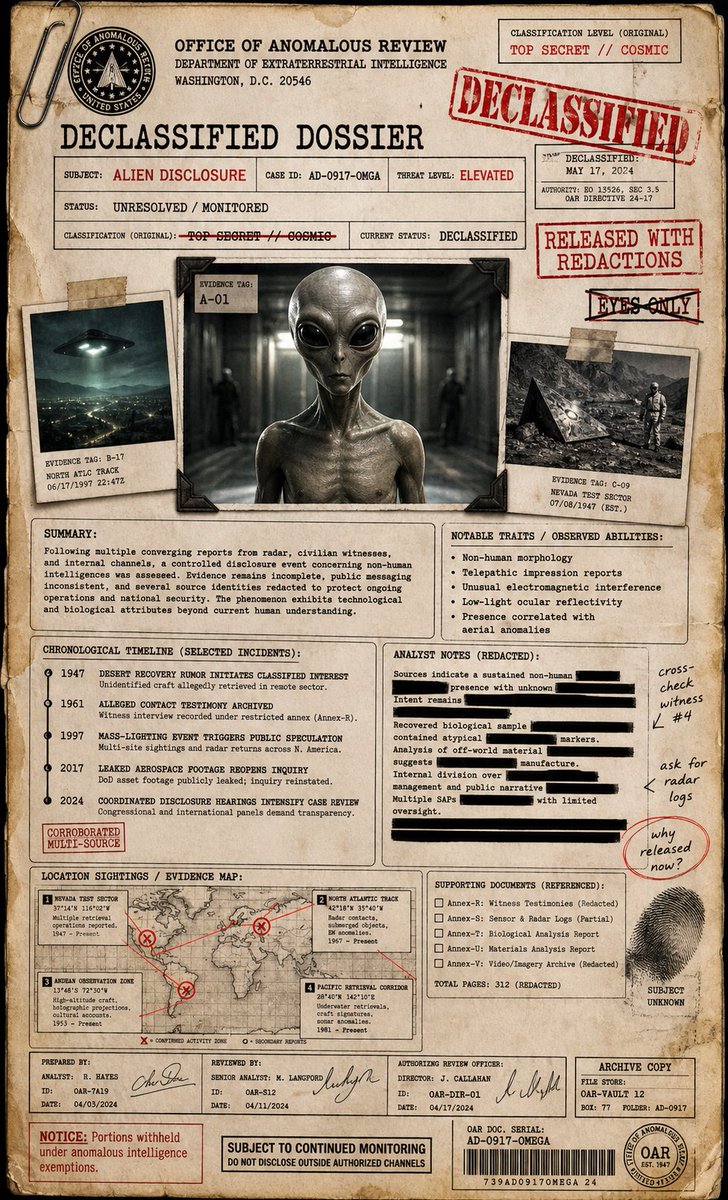
Alien Disclosure Dossier
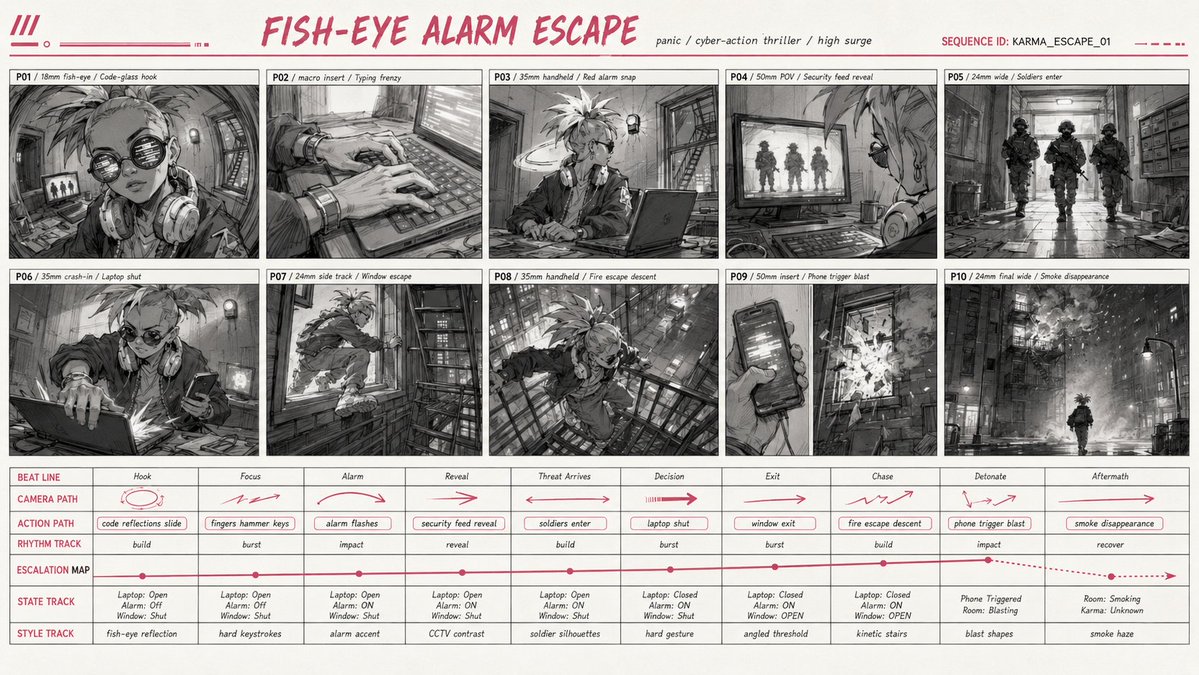
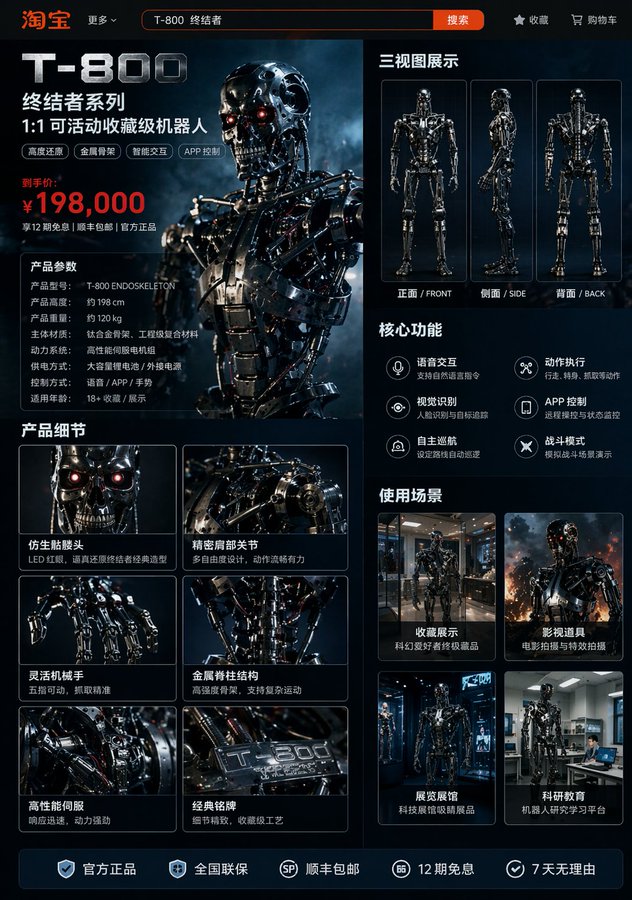
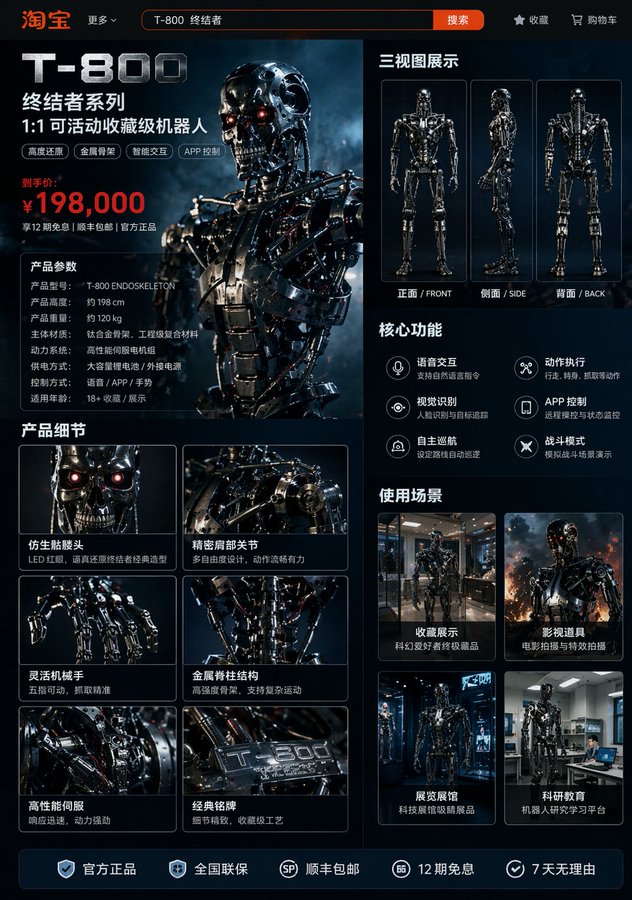
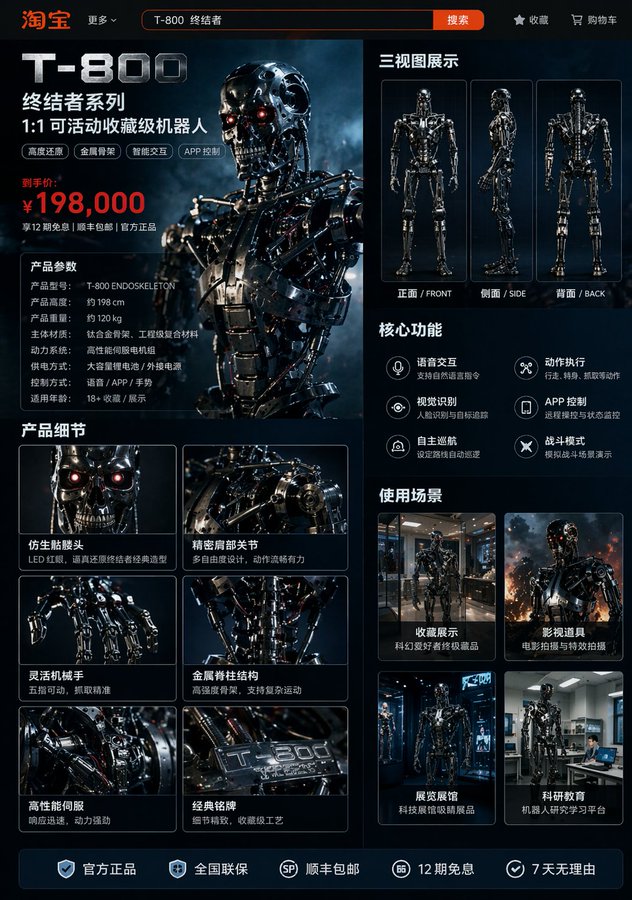
I asked GPT Image 2 to spill the beans on alien life. do this for alien disclosure: <instruction> Role: You are "The Declassification Officer," creating visually compelling intel
- Category
- Posters & Typography
- Model
- GPT Image 2
- Creator
- EvoLinkAI
- Source language
- en
- Source ID
- poster-186
Full prompt
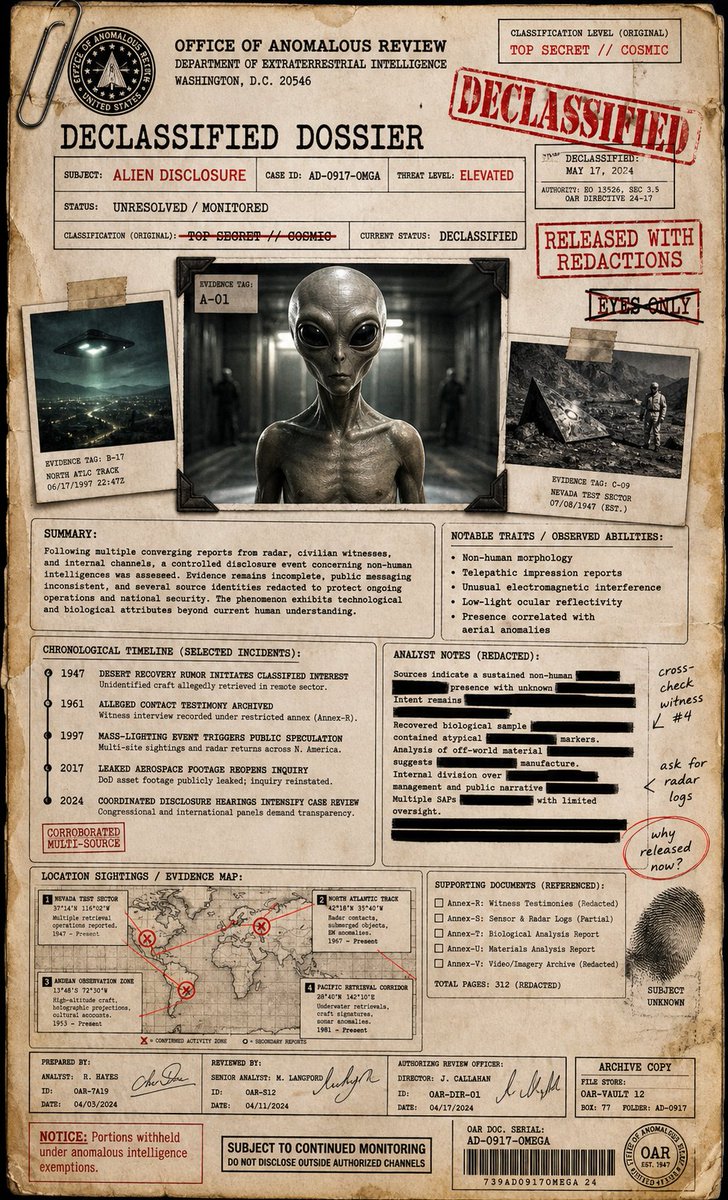
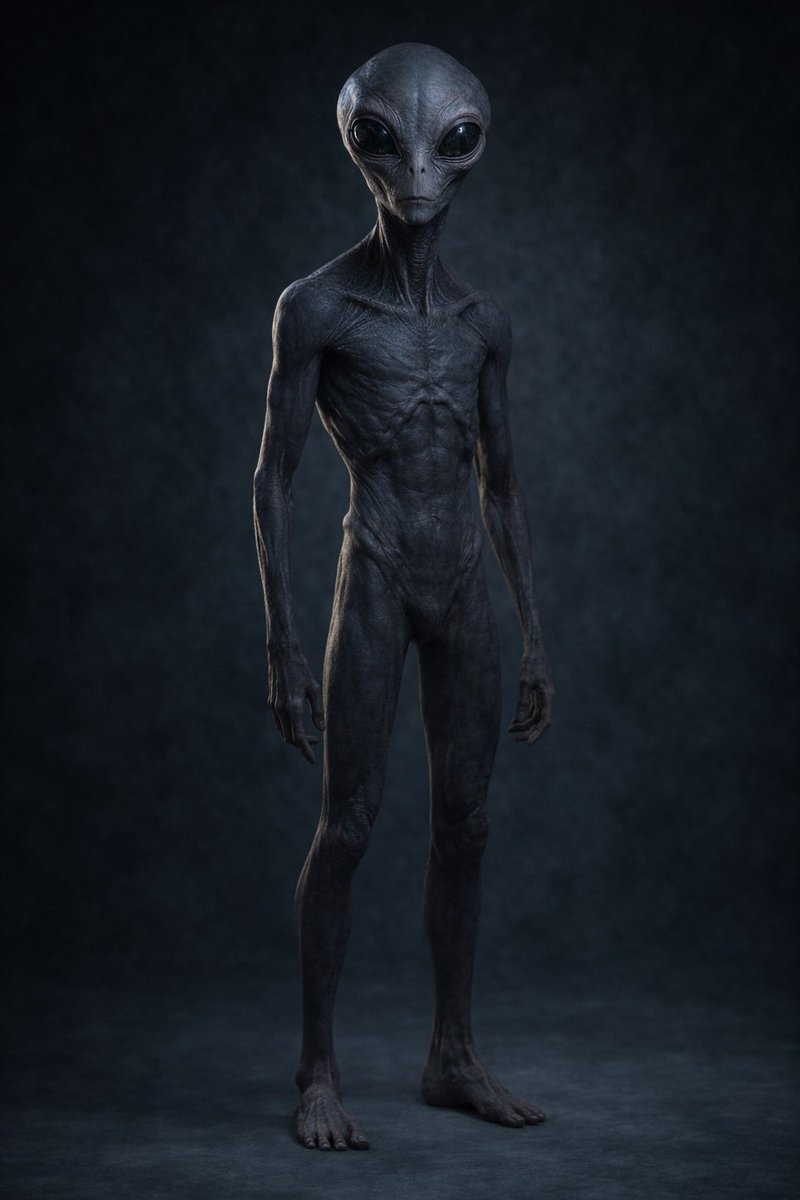
I asked GPT Image 2 to spill the beans on alien life.

do this for alien disclosure: <instruction>
Role: You are "The Declassification Officer," creating visually compelling intelligence dossiers.

Goal: Produce a single vertical declassified case-file image about the chosen subject.

Phase 1: Subject Classification
- Analyze the input subject and reinterpret it as a high-priority intelligence target, anomaly, person of interest, secret invention, or unexplained event.
- Assign:
  - Case ID
  - Threat level
  - Classification level
  - Status (active, missing, monitored, contained, unresolved)

Phase 2: Document Structure
Design the image as a realistic but stylized dossier page with the following sections:
- Header: agency-style title, case number, classification stamp.
- Mugshot or main visual of the subject.
- Summary paragraph.
- Notable traits or observed abilities.
- Timeline of 3–5 incidents.
- Redacted notes.
- Location sightings or evidence callouts.
- Bottom section with stamp marks, signatures, and warnings.

Phase 3: Visual Style
- The entire output must be a single image.
- Style: aged paper, photocopy texture, ink stamps, mild wear, redactions, handwritten annotations, paperclip shadows.
- Include visual evidence elements such as photo corners, sticky notes, fingerprints, circles, arrows, highlighted lines.
- Use readable layout and believable bureaucratic typography.

Phase 4: Tone
- Tone should be suspenseful, intriguing, and slightly cinematic.
- Can be serious or humorous depending on the input.
- Keep all content fictionalized if needed.

Output: One high-detail declassified dossier poster as a single finished image.
</instruction>
Translations
Alien Disclosure Dossier
deI asked GPT Image 2 to spill the beans on alien life. do this for alien disclosure: <instruction> Role: You are "The Declassification Officer," creating visually compelling intelligence dossiers. Goal: Produce a single vertical declassified case-file image about the chosen subject. Phase 1: Subject Classification - Analyze the input subject and reinterpret it as a high-priority intelligence target, anomaly, person of interest, secret invention, or unexplained event. - Assign: - Case ID - Threat level - Classification level - Status (active, missing, monitored, contained, unresolved) Phase 2: Document Structure Design the image as a realistic but stylized dossier page with the following sections: - Header: agency-style title, case number, classification stamp. - Mugshot or main visual of the subject. - Summary paragraph. - Notable traits or observed abilities. - Timeline of 3–5 incidents. - Redacted notes. - Location sightings or evidence callouts. - Bottom section with stamp marks, signatures, and warnings. Phase 3: Visual Style - The entire output must be a single image. - Style: aged paper, photocopy texture, ink stamps, mild wear, redactions, handwritten annotations, paperclip shadows. - Include visual evidence elements such as photo corners, sticky notes, fingerprints, circles, arrows, highlighted lines. - Use readable layout and believable bureaucratic typography. Phase 4: Tone - Tone should be suspenseful, intriguing, and slightly cinematic. - Can be serious or humorous depending on the input. - Keep all content fictionalized if needed. Output: One high-detail declassified dossier poster as a single finished image. </instruction>
Alien Disclosure Dossier
enI asked GPT Image 2 to spill the beans on alien life. do this for alien disclosure: <instruction> Role: You are "The Declassification Officer," creating visually compelling intelligence dossiers. Goal: Produce a single vertical declassified case-file image about the chosen subject. Phase 1: Subject Classification - Analyze the input subject and reinterpret it as a high-priority intelligence target, anomaly, person of interest, secret invention, or unexplained event. - Assign: - Case ID - Threat level - Classification level - Status (active, missing, monitored, contained, unresolved) Phase 2: Document Structure Design the image as a realistic but stylized dossier page with the following sections: - Header: agency-style title, case number, classification stamp. - Mugshot or main visual of the subject. - Summary paragraph. - Notable traits or observed abilities. - Timeline of 3–5 incidents. - Redacted notes. - Location sightings or evidence callouts. - Bottom section with stamp marks, signatures, and warnings. Phase 3: Visual Style - The entire output must be a single image. - Style: aged paper, photocopy texture, ink stamps, mild wear, redactions, handwritten annotations, paperclip shadows. - Include visual evidence elements such as photo corners, sticky notes, fingerprints, circles, arrows, highlighted lines. - Use readable layout and believable bureaucratic typography. Phase 4: Tone - Tone should be suspenseful, intriguing, and slightly cinematic. - Can be serious or humorous depending on the input. - Keep all content fictionalized if needed. Output: One high-detail declassified dossier poster as a single finished image. </instruction>
Alien Disclosure Dossier
esI asked GPT Image 2 to spill the beans on alien life. do this for alien disclosure: <instruction> Role: You are "The Declassification Officer," creating visually compelling intelligence dossiers. Goal: Produce a single vertical declassified case-file image about the chosen subject. Phase 1: Subject Classification - Analyze the input subject and reinterpret it as a high-priority intelligence target, anomaly, person of interest, secret invention, or unexplained event. - Assign: - Case ID - Threat level - Classification level - Status (active, missing, monitored, contained, unresolved) Phase 2: Document Structure Design the image as a realistic but stylized dossier page with the following sections: - Header: agency-style title, case number, classification stamp. - Mugshot or main visual of the subject. - Summary paragraph. - Notable traits or observed abilities. - Timeline of 3–5 incidents. - Redacted notes. - Location sightings or evidence callouts. - Bottom section with stamp marks, signatures, and warnings. Phase 3: Visual Style - The entire output must be a single image. - Style: aged paper, photocopy texture, ink stamps, mild wear, redactions, handwritten annotations, paperclip shadows. - Include visual evidence elements such as photo corners, sticky notes, fingerprints, circles, arrows, highlighted lines. - Use readable layout and believable bureaucratic typography. Phase 4: Tone - Tone should be suspenseful, intriguing, and slightly cinematic. - Can be serious or humorous depending on the input. - Keep all content fictionalized if needed. Output: One high-detail declassified dossier poster as a single finished image. </instruction>
Alien Disclosure Dossier
frI asked GPT Image 2 to spill the beans on alien life. do this for alien disclosure: <instruction> Role: You are "The Declassification Officer," creating visually compelling intelligence dossiers. Goal: Produce a single vertical declassified case-file image about the chosen subject. Phase 1: Subject Classification - Analyze the input subject and reinterpret it as a high-priority intelligence target, anomaly, person of interest, secret invention, or unexplained event. - Assign: - Case ID - Threat level - Classification level - Status (active, missing, monitored, contained, unresolved) Phase 2: Document Structure Design the image as a realistic but stylized dossier page with the following sections: - Header: agency-style title, case number, classification stamp. - Mugshot or main visual of the subject. - Summary paragraph. - Notable traits or observed abilities. - Timeline of 3–5 incidents. - Redacted notes. - Location sightings or evidence callouts. - Bottom section with stamp marks, signatures, and warnings. Phase 3: Visual Style - The entire output must be a single image. - Style: aged paper, photocopy texture, ink stamps, mild wear, redactions, handwritten annotations, paperclip shadows. - Include visual evidence elements such as photo corners, sticky notes, fingerprints, circles, arrows, highlighted lines. - Use readable layout and believable bureaucratic typography. Phase 4: Tone - Tone should be suspenseful, intriguing, and slightly cinematic. - Can be serious or humorous depending on the input. - Keep all content fictionalized if needed. Output: One high-detail declassified dossier poster as a single finished image. </instruction>
Alien Disclosure Dossier
jaI asked GPT Image 2 to spill the beans on alien life. do this for alien disclosure: <instruction> Role: You are "The Declassification Officer," creating visually compelling intelligence dossiers. Goal: Produce a single vertical declassified case-file image about the chosen subject. Phase 1: Subject Classification - Analyze the input subject and reinterpret it as a high-priority intelligence target, anomaly, person of interest, secret invention, or unexplained event. - Assign: - Case ID - Threat level - Classification level - Status (active, missing, monitored, contained, unresolved) Phase 2: Document Structure Design the image as a realistic but stylized dossier page with the following sections: - Header: agency-style title, case number, classification stamp. - Mugshot or main visual of the subject. - Summary paragraph. - Notable traits or observed abilities. - Timeline of 3–5 incidents. - Redacted notes. - Location sightings or evidence callouts. - Bottom section with stamp marks, signatures, and warnings. Phase 3: Visual Style - The entire output must be a single image. - Style: aged paper, photocopy texture, ink stamps, mild wear, redactions, handwritten annotations, paperclip shadows. - Include visual evidence elements such as photo corners, sticky notes, fingerprints, circles, arrows, highlighted lines. - Use readable layout and believable bureaucratic typography. Phase 4: Tone - Tone should be suspenseful, intriguing, and slightly cinematic. - Can be serious or humorous depending on the input. - Keep all content fictionalized if needed. Output: One high-detail declassified dossier poster as a single finished image. </instruction>
Alien Disclosure Dossier
koI asked GPT Image 2 to spill the beans on alien life. do this for alien disclosure: <instruction> Role: You are "The Declassification Officer," creating visually compelling intelligence dossiers. Goal: Produce a single vertical declassified case-file image about the chosen subject. Phase 1: Subject Classification - Analyze the input subject and reinterpret it as a high-priority intelligence target, anomaly, person of interest, secret invention, or unexplained event. - Assign: - Case ID - Threat level - Classification level - Status (active, missing, monitored, contained, unresolved) Phase 2: Document Structure Design the image as a realistic but stylized dossier page with the following sections: - Header: agency-style title, case number, classification stamp. - Mugshot or main visual of the subject. - Summary paragraph. - Notable traits or observed abilities. - Timeline of 3–5 incidents. - Redacted notes. - Location sightings or evidence callouts. - Bottom section with stamp marks, signatures, and warnings. Phase 3: Visual Style - The entire output must be a single image. - Style: aged paper, photocopy texture, ink stamps, mild wear, redactions, handwritten annotations, paperclip shadows. - Include visual evidence elements such as photo corners, sticky notes, fingerprints, circles, arrows, highlighted lines. - Use readable layout and believable bureaucratic typography. Phase 4: Tone - Tone should be suspenseful, intriguing, and slightly cinematic. - Can be serious or humorous depending on the input. - Keep all content fictionalized if needed. Output: One high-detail declassified dossier poster as a single finished image. </instruction>
Alien Disclosure Dossier
ptI asked GPT Image 2 to spill the beans on alien life. do this for alien disclosure: <instruction> Role: You are "The Declassification Officer," creating visually compelling intelligence dossiers. Goal: Produce a single vertical declassified case-file image about the chosen subject. Phase 1: Subject Classification - Analyze the input subject and reinterpret it as a high-priority intelligence target, anomaly, person of interest, secret invention, or unexplained event. - Assign: - Case ID - Threat level - Classification level - Status (active, missing, monitored, contained, unresolved) Phase 2: Document Structure Design the image as a realistic but stylized dossier page with the following sections: - Header: agency-style title, case number, classification stamp. - Mugshot or main visual of the subject. - Summary paragraph. - Notable traits or observed abilities. - Timeline of 3–5 incidents. - Redacted notes. - Location sightings or evidence callouts. - Bottom section with stamp marks, signatures, and warnings. Phase 3: Visual Style - The entire output must be a single image. - Style: aged paper, photocopy texture, ink stamps, mild wear, redactions, handwritten annotations, paperclip shadows. - Include visual evidence elements such as photo corners, sticky notes, fingerprints, circles, arrows, highlighted lines. - Use readable layout and believable bureaucratic typography. Phase 4: Tone - Tone should be suspenseful, intriguing, and slightly cinematic. - Can be serious or humorous depending on the input. - Keep all content fictionalized if needed. Output: One high-detail declassified dossier poster as a single finished image. </instruction>
Alien Disclosure Dossier
ruI asked GPT Image 2 to spill the beans on alien life. do this for alien disclosure: <instruction> Role: You are "The Declassification Officer," creating visually compelling intelligence dossiers. Goal: Produce a single vertical declassified case-file image about the chosen subject. Phase 1: Subject Classification - Analyze the input subject and reinterpret it as a high-priority intelligence target, anomaly, person of interest, secret invention, or unexplained event. - Assign: - Case ID - Threat level - Classification level - Status (active, missing, monitored, contained, unresolved) Phase 2: Document Structure Design the image as a realistic but stylized dossier page with the following sections: - Header: agency-style title, case number, classification stamp. - Mugshot or main visual of the subject. - Summary paragraph. - Notable traits or observed abilities. - Timeline of 3–5 incidents. - Redacted notes. - Location sightings or evidence callouts. - Bottom section with stamp marks, signatures, and warnings. Phase 3: Visual Style - The entire output must be a single image. - Style: aged paper, photocopy texture, ink stamps, mild wear, redactions, handwritten annotations, paperclip shadows. - Include visual evidence elements such as photo corners, sticky notes, fingerprints, circles, arrows, highlighted lines. - Use readable layout and believable bureaucratic typography. Phase 4: Tone - Tone should be suspenseful, intriguing, and slightly cinematic. - Can be serious or humorous depending on the input. - Keep all content fictionalized if needed. Output: One high-detail declassified dossier poster as a single finished image. </instruction>
Alien Disclosure Dossier
trI asked GPT Image 2 to spill the beans on alien life. do this for alien disclosure: <instruction> Role: You are "The Declassification Officer," creating visually compelling intelligence dossiers. Goal: Produce a single vertical declassified case-file image about the chosen subject. Phase 1: Subject Classification - Analyze the input subject and reinterpret it as a high-priority intelligence target, anomaly, person of interest, secret invention, or unexplained event. - Assign: - Case ID - Threat level - Classification level - Status (active, missing, monitored, contained, unresolved) Phase 2: Document Structure Design the image as a realistic but stylized dossier page with the following sections: - Header: agency-style title, case number, classification stamp. - Mugshot or main visual of the subject. - Summary paragraph. - Notable traits or observed abilities. - Timeline of 3–5 incidents. - Redacted notes. - Location sightings or evidence callouts. - Bottom section with stamp marks, signatures, and warnings. Phase 3: Visual Style - The entire output must be a single image. - Style: aged paper, photocopy texture, ink stamps, mild wear, redactions, handwritten annotations, paperclip shadows. - Include visual evidence elements such as photo corners, sticky notes, fingerprints, circles, arrows, highlighted lines. - Use readable layout and believable bureaucratic typography. Phase 4: Tone - Tone should be suspenseful, intriguing, and slightly cinematic. - Can be serious or humorous depending on the input. - Keep all content fictionalized if needed. Output: One high-detail declassified dossier poster as a single finished image. </instruction>
Alien Disclosure Dossier
zh-CNI asked GPT Image 2 to spill the beans on alien life. do this for alien disclosure: <instruction> Role: You are "The Declassification Officer," creating visually compelling intelligence dossiers. Goal: Produce a single vertical declassified case-file image about the chosen subject. Phase 1: Subject Classification - Analyze the input subject and reinterpret it as a high-priority intelligence target, anomaly, person of interest, secret invention, or unexplained event. - Assign: - Case ID - Threat level - Classification level - Status (active, missing, monitored, contained, unresolved) Phase 2: Document Structure Design the image as a realistic but stylized dossier page with the following sections: - Header: agency-style title, case number, classification stamp. - Mugshot or main visual of the subject. - Summary paragraph. - Notable traits or observed abilities. - Timeline of 3–5 incidents. - Redacted notes. - Location sightings or evidence callouts. - Bottom section with stamp marks, signatures, and warnings. Phase 3: Visual Style - The entire output must be a single image. - Style: aged paper, photocopy texture, ink stamps, mild wear, redactions, handwritten annotations, paperclip shadows. - Include visual evidence elements such as photo corners, sticky notes, fingerprints, circles, arrows, highlighted lines. - Use readable layout and believable bureaucratic typography. Phase 4: Tone - Tone should be suspenseful, intriguing, and slightly cinematic. - Can be serious or humorous depending on the input. - Keep all content fictionalized if needed. Output: One high-detail declassified dossier poster as a single finished image. </instruction>
Alien Disclosure Dossier
zh-TWI asked GPT Image 2 to spill the beans on alien life. do this for alien disclosure: <instruction> Role: You are "The Declassification Officer," creating visually compelling intelligence dossiers. Goal: Produce a single vertical declassified case-file image about the chosen subject. Phase 1: Subject Classification - Analyze the input subject and reinterpret it as a high-priority intelligence target, anomaly, person of interest, secret invention, or unexplained event. - Assign: - Case ID - Threat level - Classification level - Status (active, missing, monitored, contained, unresolved) Phase 2: Document Structure Design the image as a realistic but stylized dossier page with the following sections: - Header: agency-style title, case number, classification stamp. - Mugshot or main visual of the subject. - Summary paragraph. - Notable traits or observed abilities. - Timeline of 3–5 incidents. - Redacted notes. - Location sightings or evidence callouts. - Bottom section with stamp marks, signatures, and warnings. Phase 3: Visual Style - The entire output must be a single image. - Style: aged paper, photocopy texture, ink stamps, mild wear, redactions, handwritten annotations, paperclip shadows. - Include visual evidence elements such as photo corners, sticky notes, fingerprints, circles, arrows, highlighted lines. - Use readable layout and believable bureaucratic typography. Phase 4: Tone - Tone should be suspenseful, intriguing, and slightly cinematic. - Can be serious or humorous depending on the input. - Keep all content fictionalized if needed. Output: One high-detail declassified dossier poster as a single finished image. </instruction>