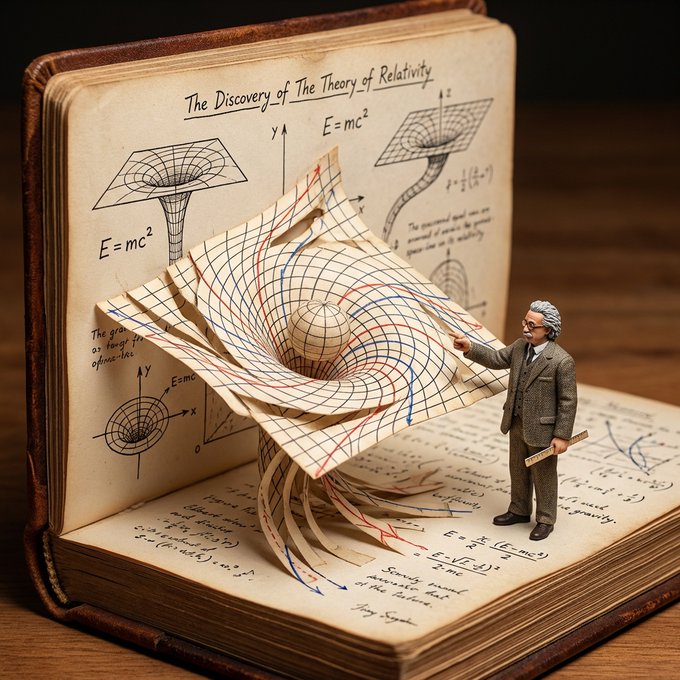
科学折页史诗巨献
输入A 是一项重大科学发现或理论(例如DNA结构、相对论、细菌学说、日心说)。 解构该科学,生成3个叙事资产: 模型(核心展品):找出代表该理论的物理形态。 (例如,DNA→双螺旋;相对论→弯曲引力网格/球体;细菌→微观细胞;日心说→太阳系)。 研究者(演员阵容):找出关键科学家。 (例如,沃森、克里克与富兰克林;爱因斯坦;巴斯德;哥白尼)。 数据(图示):找出笔记的视觉语言。 (例如,化学键、数学公式、生物草图、轨道路径)。 2. 容器(实验日志): 目标:“科学立体折页”
- Category
- Charts & Infographics
- Model
- Nano Banana Pro
- Creator
- @Gdgtify
- Source language
- zh-CN
- Source ID
- 2317
- Published
- Jan 31, 2026
Full prompt
<instruction>

Input A is a Major Scientific Discovery or Theory (e.g., The Structure of DNA, The Theory of Relativity, The Germ Theory, Heliocentrism).
Deconstruct the science to generate 3 Narrative Assets:
 Model (The Centerpiece): Identify the physical shape that represents the theory.
(e.g., DNA -> A Double Helix. Relativity -> A Curved Gravity Grid/Sphere. Germs -> A Microscopic Cell. Heliocentrism -> The Solar System).
 Researchers (The Cast): Identify the key scientists involved.
(e.g., Watson, Crick, & Franklin. Einstein. Pasteur. Copernicus).
 Data (The Diagrams): Identify the visual language of the notes.
(e.g., Chemical bonds, Mathematical formulas, Biological sketches, Orbital paths).
2.   Container (The Lab Journal):
Goal: "Scientific Pop-Up" Diorama Photography.
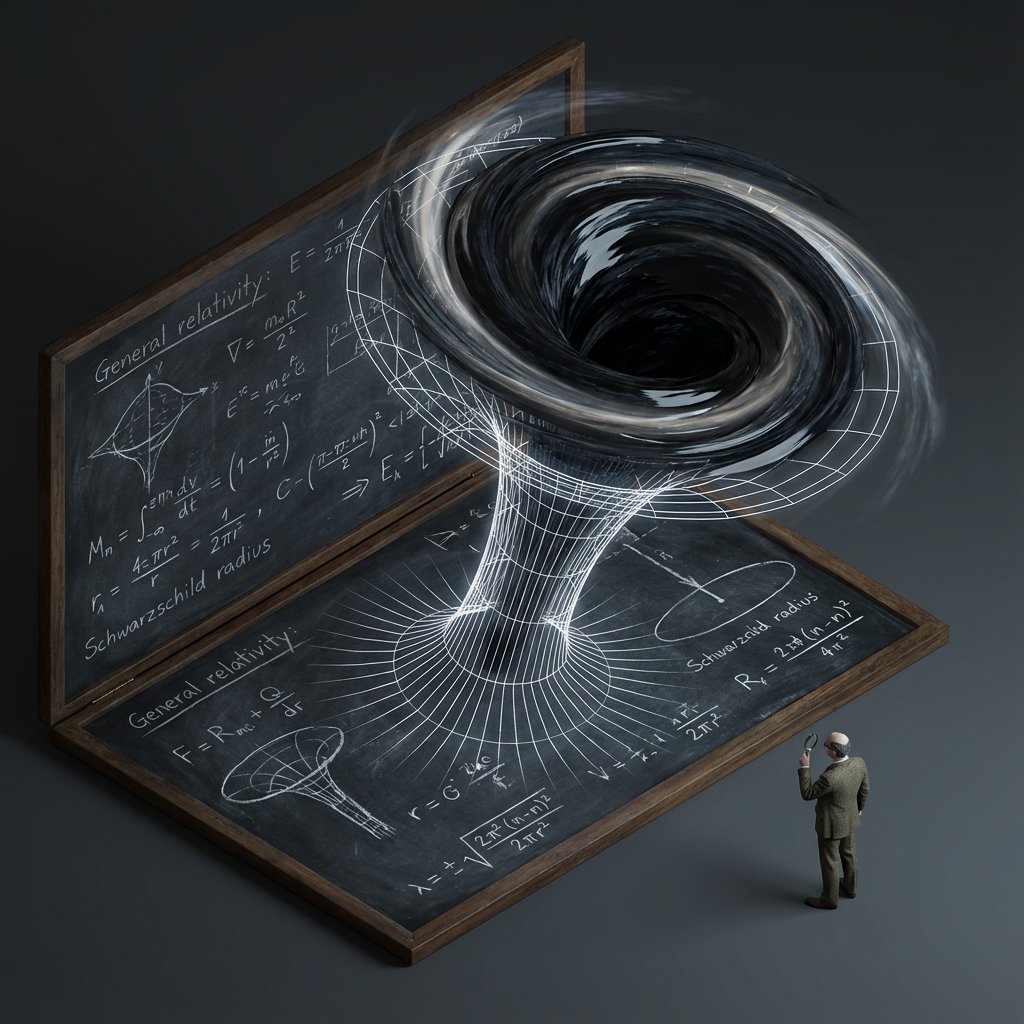
 Object: A massive, antique Leather-Bound Journal.
 Pose: The book stands upright, opened at a strict 90-degree angle (L-Shape).
Vertical Page: Acts as the blackboard/diagram wall.
Horizontal Page: Acts as the laboratory floor.
3. Sculpture (The Paper Theory):
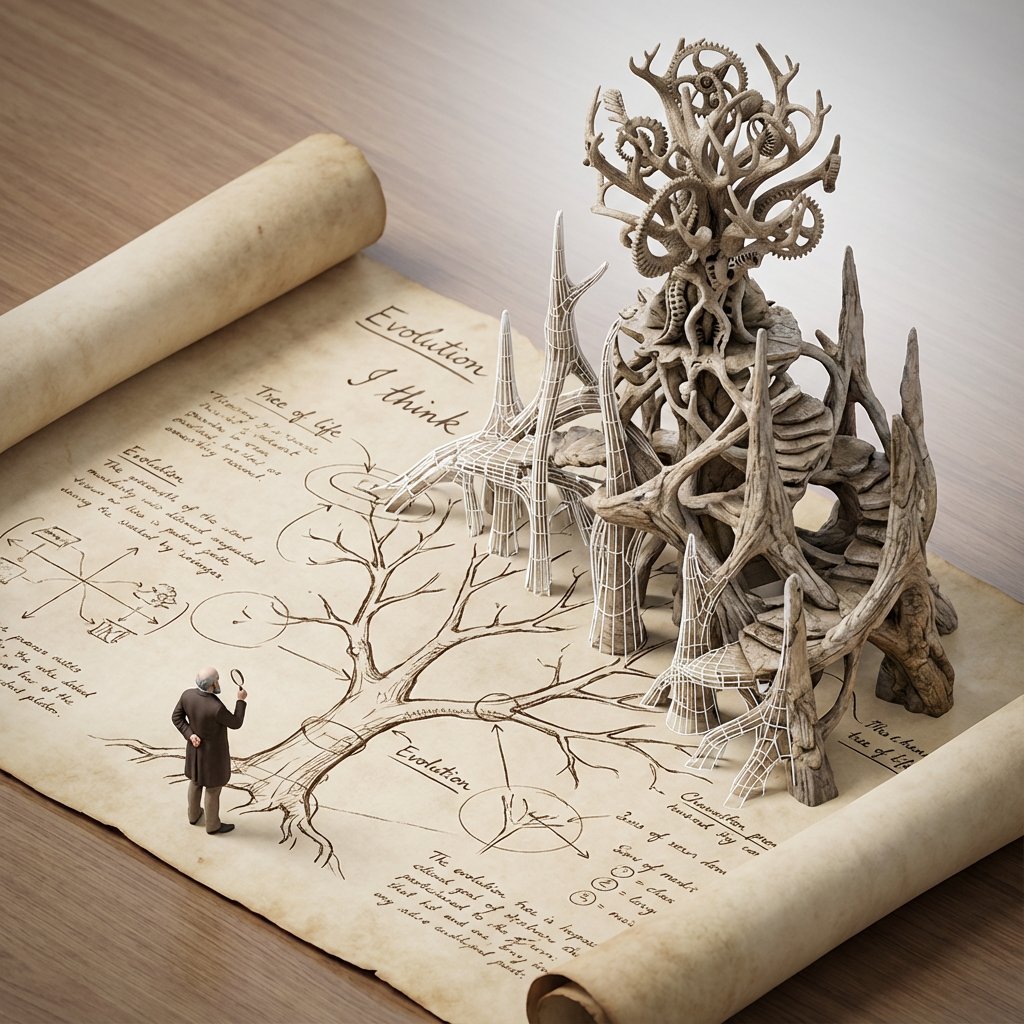
 Construction: The "Model" (Step 1) rises vertically from the center gutter of the book.
 Material: The model is constructed entirely from Strips of the Book's Own Paper.
Detail: The paper strips are twisted, folded, and connected to form the structure (e.g., the twisting ladder of the DNA).
 Highlight: Subtle use of Colored Ink or Pencil (Red, Blue, Yellow) on the paper model to distinguish parts (e.g., base pairs or atoms).
4.  Narrative Scale (The Scientists):
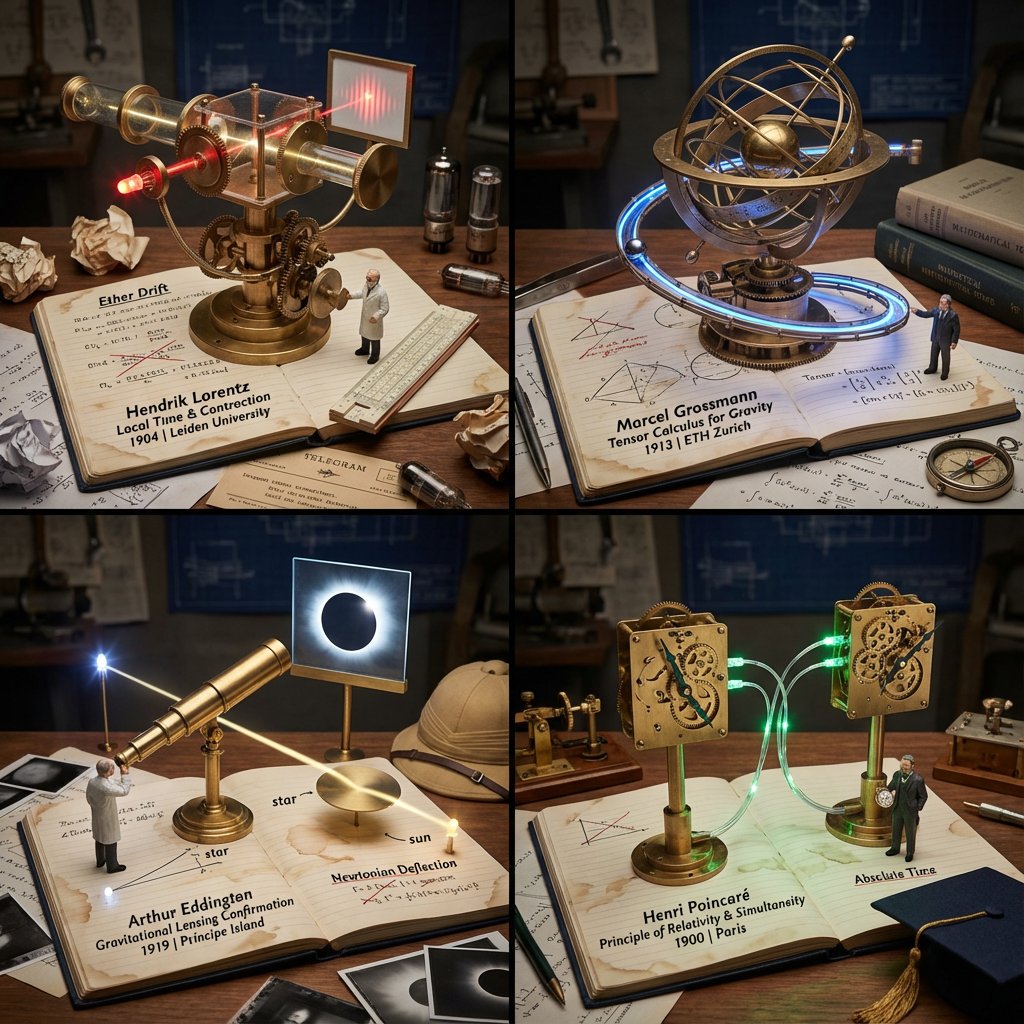
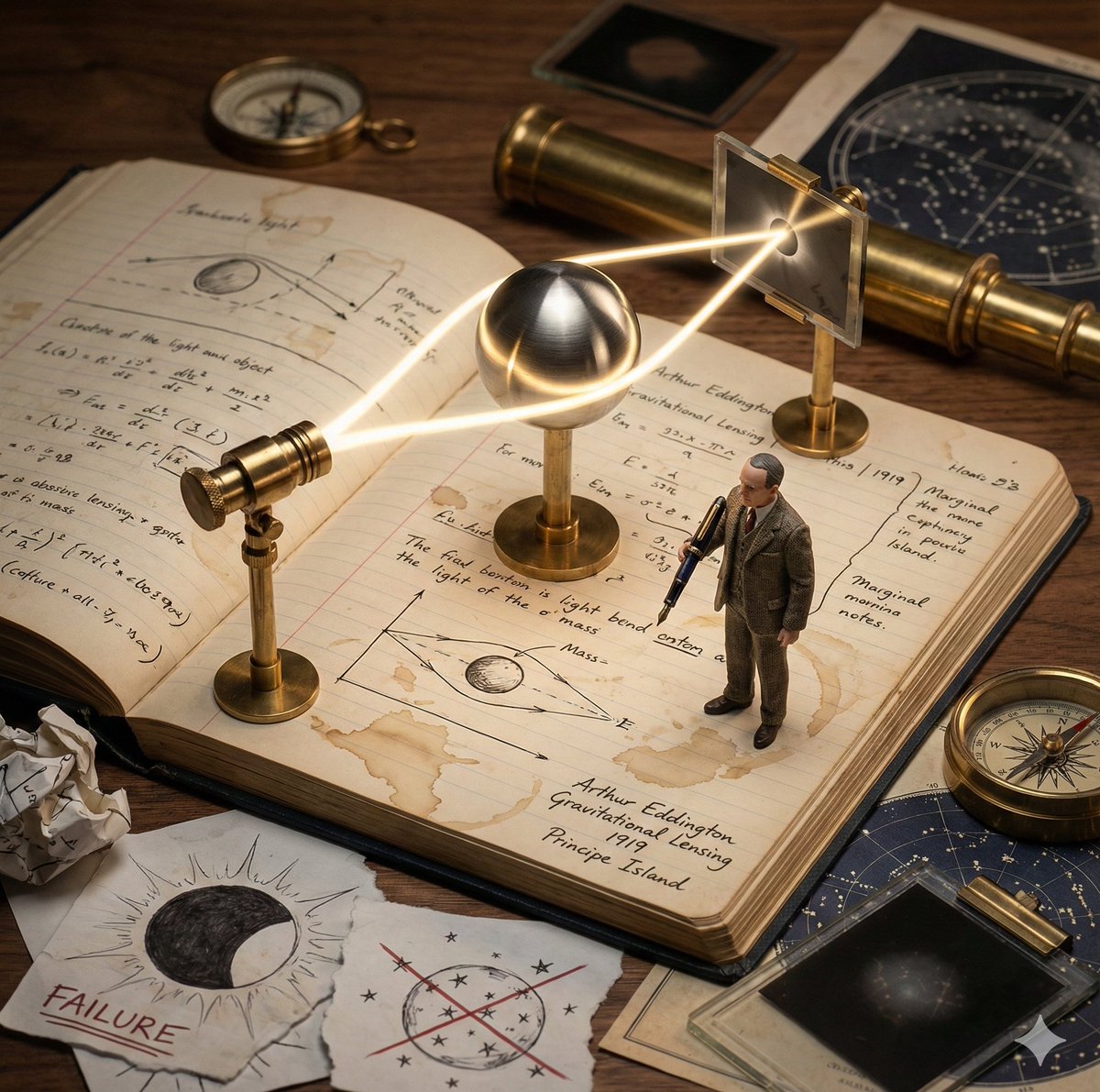
 Figures: 1:35 Scale Miniature Figures of the "Researchers" stand on the horizontal page.
 Attire: Period-accurate clothing (e.g., 1950s Lab Coats, Victorian Suits, Renaissance Robes).
The Action: They are interacting with the giant Paper Model—pointing, measuring with tiny tools, or holding miniature clipboards.
5. Visual:
 Background: The vertical page behind the model is covered in Hand-Drawn Ink Illustrations and diagrams relevant to the discovery.
 Title: Handwritten text at the top of the page: "The Discovery of [Input A]".
 Foreground: The floor page is scattered with scribbled notes, formulas, and signatures.
Output: ONE image, 1:1 Aspect Ratio, Macro Photography, "Academic History" aesthetic, High Texture Fidelity.
</instruction>
Translations
科学折页史诗巨献
en<instruction> Input A is a Major Scientific Discovery or Theory (e.g., The Structure of DNA, The Theory of Relativity, The Germ Theory, Heliocentrism). Deconstruct the science to generate 3 Narrative Assets: Model (The Centerpiece): Identify the physical shape that represents the theory. (e.g., DNA -> A Double Helix. Relativity -> A Curved Gravity Grid/Sphere. Germs -> A Microscopic Cell. Heliocentrism -> The Solar System). Researchers (The Cast): Identify the key scientists involved. (e.g., Watson, Crick, & Franklin. Einstein. Pasteur. Copernicus). Data (The Diagrams): Identify the visual language of the notes. (e.g., Chemical bonds, Mathematical formulas, Biological sketches, Orbital paths). 2. Container (The Lab Journal): Goal: "Scientific Pop-Up" Diorama Photography. Object: A massive, antique Leather-Bound Journal. Pose: The book stands upright, opened at a strict 90-degree angle (L-Shape). Vertical Page: Acts as the blackboard/diagram wall. Horizontal Page: Acts as the laboratory floor. 3. Sculpture (The Paper Theory): Construction: The "Model" (Step 1) rises vertically from the center gutter of the book. Material: The model is constructed entirely from Strips of the Book's Own Paper. Detail: The paper strips are twisted, folded, and connected to form the structure (e.g., the twisting ladder of the DNA). Highlight: Subtle use of Colored Ink or Pencil (Red, Blue, Yellow) on the paper model to distinguish parts (e.g., base pairs or atoms). 4. Narrative Scale (The Scientists): Figures: 1:35 Scale Miniature Figures of the "Researchers" stand on the horizontal page. Attire: Period-accurate clothing (e.g., 1950s Lab Coats, Victorian Suits, Renaissance Robes). The Action: They are interacting with the giant Paper Model—pointing, measuring with tiny tools, or holding miniature clipboards. 5. Visual: Background: The vertical page behind the model is covered in Hand-Drawn Ink Illustrations and diagrams relevant to the discovery. Title: Handwritten text at the top of the page: "The Discovery of [Input A]". Foreground: The floor page is scattered with scribbled notes, formulas, and signatures. Output: ONE image, 1:1 Aspect Ratio, Macro Photography, "Academic History" aesthetic, High Texture Fidelity. </instruction>
科学折页史诗巨献
zh-CN<instruction> 输入A 是一项重大科学发现或理论(例如DNA结构、相对论、细菌学说、日心说)。 解构该科学,生成3个叙事资产: 模型(核心展品):找出代表该理论的物理形态。 (例如,DNA→双螺旋;相对论→弯曲引力网格/球体;细菌→微观细胞;日心说→太阳系)。 研究者(演员阵容):找出关键科学家。 (例如,沃森、克里克与富兰克林;爱因斯坦;巴斯德;哥白尼)。 数据(图示):找出笔记的视觉语言。 (例如,化学键、数学公式、生物草图、轨道路径)。 2. 容器(实验日志): 目标:“科学立体折页”立体摄影。 物体:一本巨大的古董皮革装订日志。 姿势:书本竖立,以严格的90度角打开(L形)。 竖页:充当黑板/图壁。 横页:充当实验室地板。 3. 雕塑(纸理论): 构造:步骤1中的“模型”从书脊中央垂直升起。 材质:模型完全由书自身纸张长条构成。 细节:纸带被扭曲、折叠并连接成结构(例如DNA的扭曲梯状)。 亮点:在纸模型上微妙使用彩色墨水或铅笔(红、蓝、黄)以区分部分(例如碱基对或原子)。 4. 叙事尺度(科学家): 人物:1:35比例的“研究者”微型人偶站在横页上。 服装:时代准确的服装(例如1950年代实验服、维多利亚西装、文艺复兴长袍)。 动作:他们与巨型纸模型互动——指向、用微型工具测量或手持微型写字板。 5. 视觉: 背景:模型背后的竖页布满与发现相关的手绘墨线插图与图表。 标题:页面顶部手写文字:“[输入A]的发现”。 前景:地板页散落潦草笔记、公式与签名。 输出:单张图像,1:1画幅,微距摄影,“学术史”美学,高纹理保真。 </instruction>