平行时空的 1990 年代未来涩谷
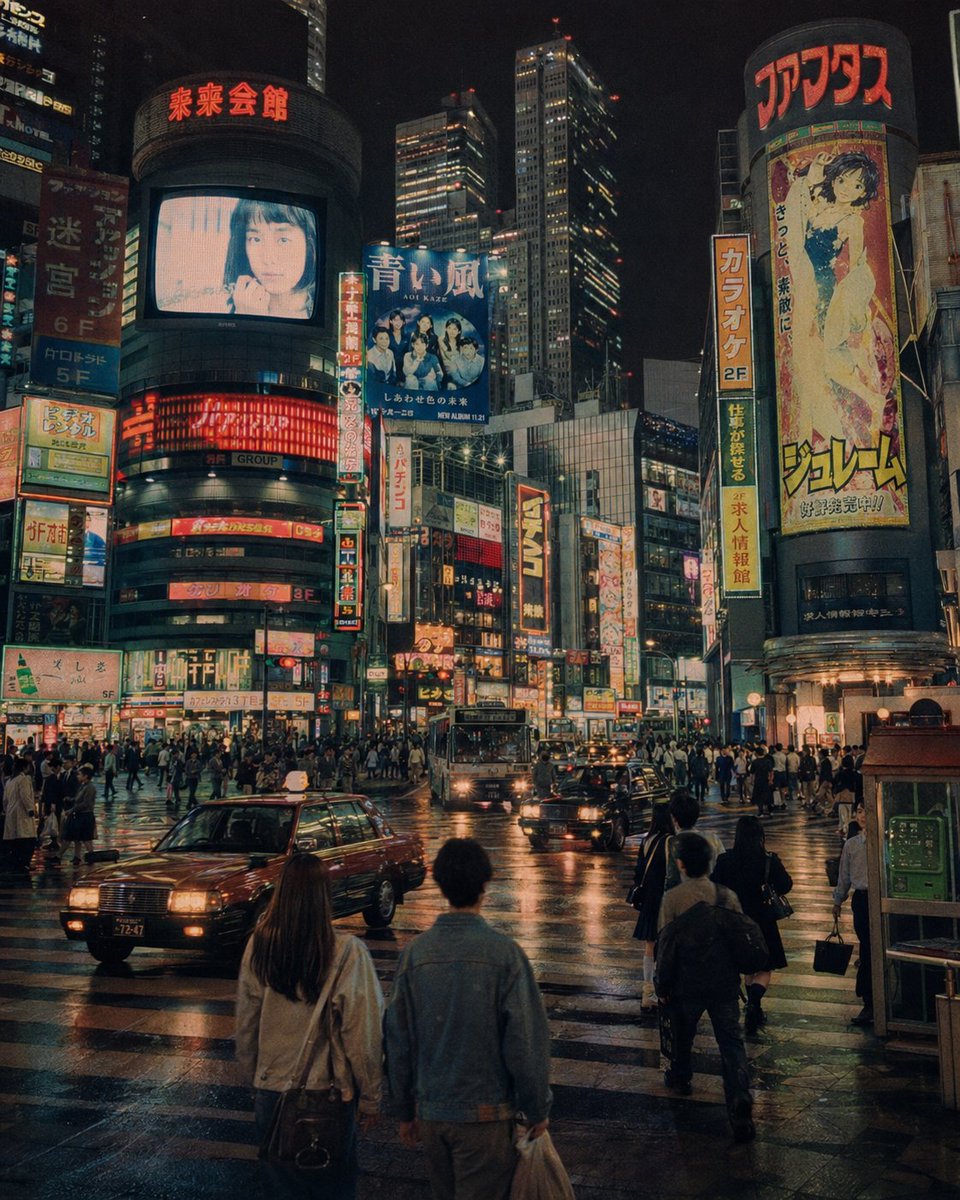
生成一个电影质感的架空历史东京街景,展现 1990 年代日本都市文化在摩天大楼林立的未来中延续的景象。
- Category
- Charts & Infographics
- Model
- GPT Image 2
- Creator
- かげかげ
- Source language
- en
- Source ID
- 19580
- Published
- May 10, 2026
Full prompt
Create a photorealistic cinematic night street scene of {argument name="city and district" default="Shibuya, Tokyo"} as if Japan remained culturally frozen in the 1990s but reached {argument name="future year" default="2026"}: no smartphones, no modern LED minimalism, only flip phones, pagers, taxis, buses, analog nightlife, and dense Showa-to-Heisei era signage beneath newer high-rise towers. The viewpoint is from a wet pedestrian crossing after rain, looking into a crowded neon entertainment district with glossy reflections on black pavement. Include exactly 4 prominent vehicles: 1 red-and-cream taxi in the lower left foreground, 1 city bus with headlights in the center distance, and 2 dark sedans in the midground traffic. Include a large crowd of commuters and nightlife pedestrians in 1990s clothing; foreground has 2 main figures seen from behind, a young woman with long hair and a shoulder bag on the left and a young man in a denim jacket holding a shopping bag in the center. Architecture should mix towering 2020s-scale skyscrapers in the background with 1990s Japanese commercial buildings covered in vertical signs, karaoke ads, hostess-club notices, CD-shop-style posters, pachinko and entertainment billboards. Include exactly 3 dominant billboard clusters: a curved building on the left with red Japanese characters and a large washed-out screen, a central blue idol-group billboard reading {argument name="central billboard text" default="青い風"}, and a tall cylindrical right-side billboard with bold red Japanese lettering and an illustrated retro anime-style woman. Use Japanese text throughout the signage, but make it slightly imperfect and atmospheric rather than clean typography. Lighting should be moody, humid, and filmic, with amber taxi lights, cyan-blue signs, red neon, halation, deep shadows, visible grain, slight lens softness, and a nostalgic 35mm film look. Composition should feel like a documentary photograph from an alternate-history Tokyo, crowded, vertical, overwhelming, and realistic, with {argument name="weather mood" default="rain-soaked streets and humid night air"}.Translations
平行时空的 1990 年代未来涩谷
enCreate a photorealistic cinematic night street scene of {argument name="city and district" default="Shibuya, Tokyo"} as if Japan remained culturally frozen in the 1990s but reached {argument name="future year" default="2026"}: no smartphones, no modern LED minimalism, only flip phones, pagers, taxis, buses, analog nightlife, and dense Showa-to-Heisei era signage beneath newer high-rise towers. The viewpoint is from a wet pedestrian crossing after rain, looking into a crowded neon entertainment district with glossy reflections on black pavement. Include exactly 4 prominent vehicles: 1 red-and-cream taxi in the lower left foreground, 1 city bus with headlights in the center distance, and 2 dark sedans in the midground traffic. Include a large crowd of commuters and nightlife pedestrians in 1990s clothing; foreground has 2 main figures seen from behind, a young woman with long hair and a shoulder bag on the left and a young man in a denim jacket holding a shopping bag in the center. Architecture should mix towering 2020s-scale skyscrapers in the background with 1990s Japanese commercial buildings covered in vertical signs, karaoke ads, hostess-club notices, CD-shop-style posters, pachinko and entertainment billboards. Include exactly 3 dominant billboard clusters: a curved building on the left with red Japanese characters and a large washed-out screen, a central blue idol-group billboard reading {argument name="central billboard text" default="青い風"}, and a tall cylindrical right-side billboard with bold red Japanese lettering and an illustrated retro anime-style woman. Use Japanese text throughout the signage, but make it slightly imperfect and atmospheric rather than clean typography. Lighting should be moody, humid, and filmic, with amber taxi lights, cyan-blue signs, red neon, halation, deep shadows, visible grain, slight lens softness, and a nostalgic 35mm film look. Composition should feel like a documentary photograph from an alternate-history Tokyo, crowded, vertical, overwhelming, and realistic, with {argument name="weather mood" default="rain-soaked streets and humid night air"}.
平行时空的 1990 年代未来涩谷
zh-CN创作一张具有照片级真实感的电影质感夜间街景,地点为 {argument name="city and district" default="东京涩谷"},设定为日本文化停留在 1990 年代但科技发展至 {argument name="future year" default="2026 年"} 的平行时空:没有智能手机,没有现代简约的 LED 灯光,只有翻盖手机、寻呼机、出租车、公交车、模拟时代的夜生活,以及在新建的高层塔楼下密集的昭和至平成时代风格招牌。视角位于雨后潮湿的人行横道,望向拥挤的霓虹娱乐区,黑色路面上映出绚丽的倒影。画面中需包含 4 辆显眼的车辆:左下角前景处一辆红白相间的出租车,中心远景处一辆开启前灯的城市公交车,以及中景车流中的 2 辆深色轿车。包含大量身着 1990 年代服饰的通勤者和夜生活行人;前景有 2 位背对镜头的核心人物,左侧是一位留着长发、背着单肩包的年轻女性,中心是一位穿着牛仔夹克、手提购物袋的年轻男性。建筑风格应将背景中 2020 年代规模的摩天大楼与覆盖着垂直招牌、卡拉 OK 广告、夜店告示、CD 店风格海报、弹珠机及娱乐广告牌的 1990 年代日本商业建筑融合在一起。包含 3 组核心广告牌:左侧一座带有红色日文字符和大型褪色屏幕的弧形建筑,中心一块写有 {argument name="central billboard text" default="青い風"} 的蓝色偶像团体广告牌,以及右侧一座带有醒目红色日文字体和复古动漫风格女性插画的高大圆柱形广告牌。所有招牌均使用日文,但字体应略显不完美且具有氛围感,而非整齐划一的排版。灯光应呈现出阴郁、潮湿且具有电影感的氛围,包含琥珀色的出租车灯、青蓝色的招牌、红色霓虹灯、光晕效果、深邃的阴影、可见的颗粒感、轻微的镜头柔焦以及怀旧的 35 毫米胶片质感。构图应如同架空历史东京的纪实摄影,拥挤、垂直、令人震撼且真实,并呈现 {argument name="weather mood" default="雨水浸润的街道和潮湿的夜空气"}。