超现实 404 文艺复兴拼贴画
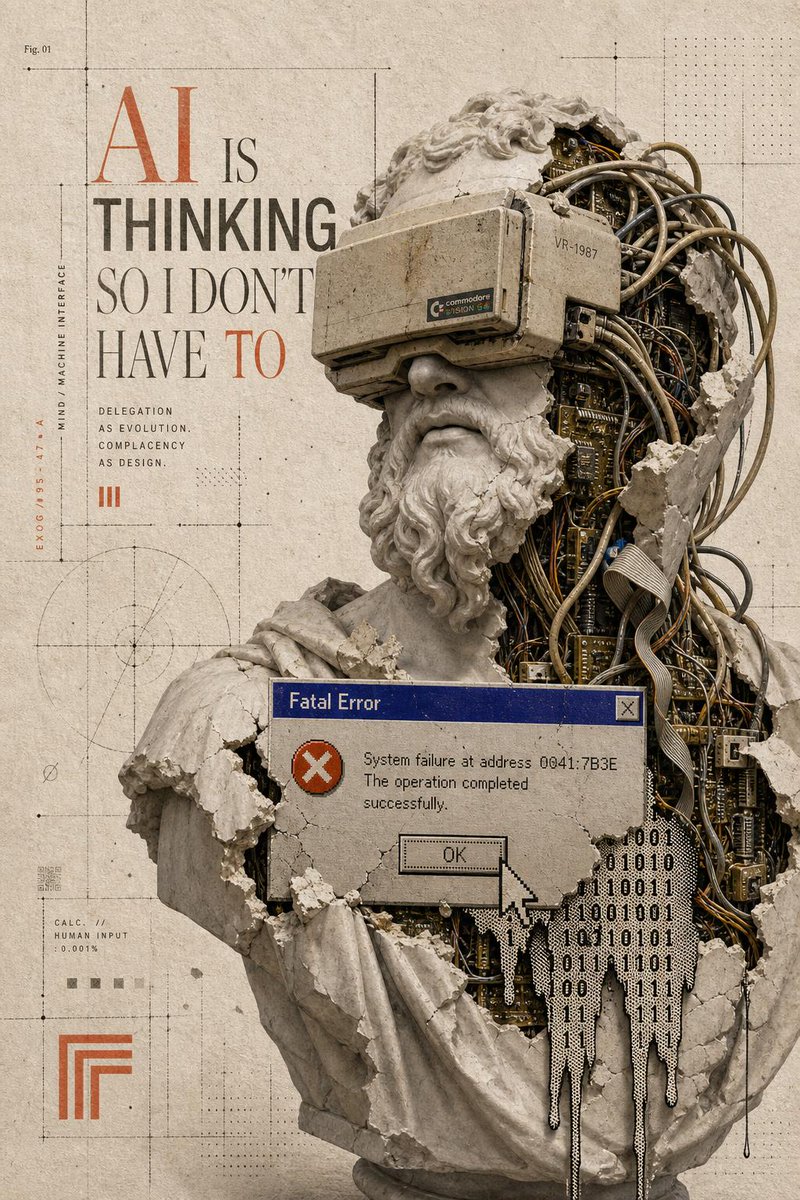
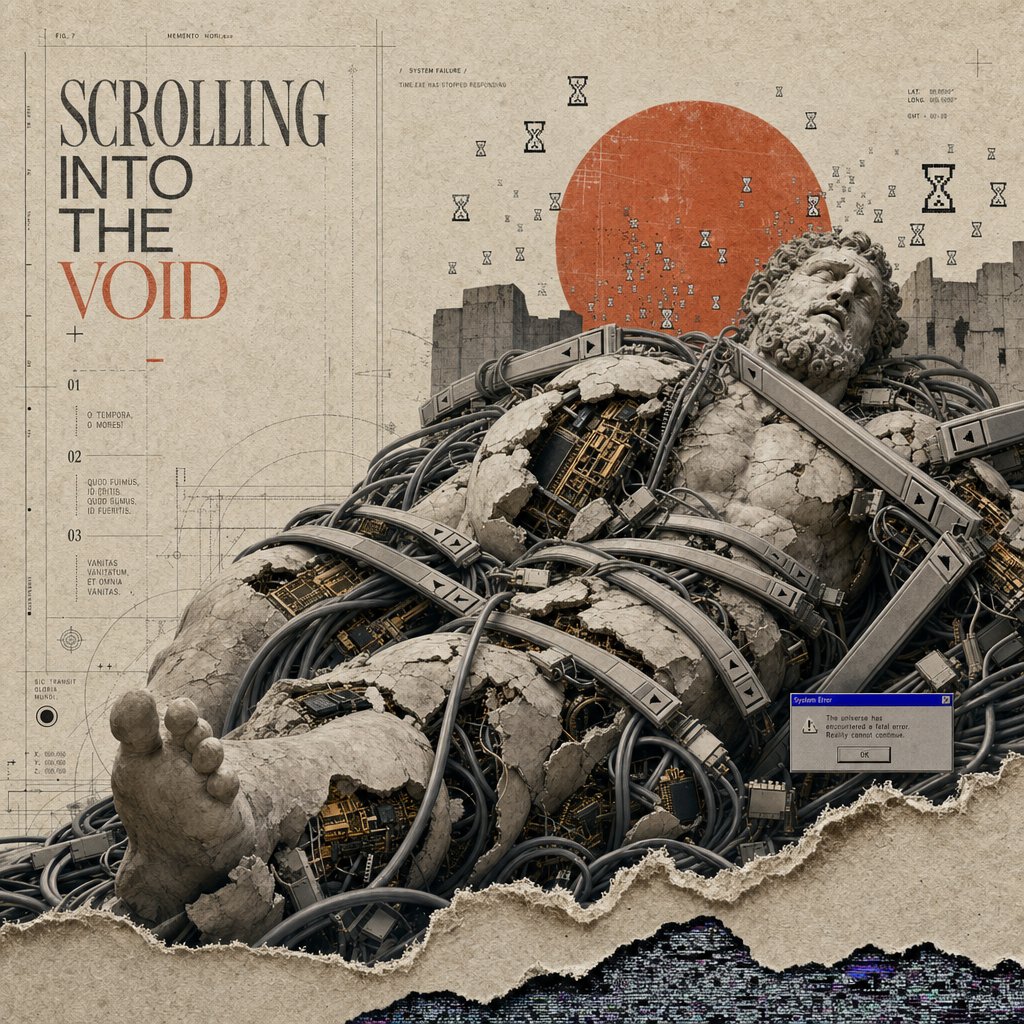
生成一张横向超现实主义编辑海报,画面融合了破碎的文艺复兴雕像、电路、古董排版、沙漏以及复古系统错误。
- Category
- Charts & Infographics
- Model
- GPT Image 2
- Creator
- Horus He
- Source language
- en
- Source ID
- 20939
- Published
- May 16, 2026
Full prompt
Goal: Create a 3:2 horizontal surreal Renaissance-collage poster about a digital 404 void, combining antique manuscript design, classical sculpture, cybernetic ruin, and obsolete computer UI.

Canvas: Square-ish 3:2 editorial poster composition on aged beige parchment paper with stains, fibers, faint grid lines, registration marks, thin drafting guides, tiny technical annotations, and a torn-paper lower edge revealing a strip of dark glitchy code/static underneath.

Main subject: A colossal reclining Renaissance marble statue of a bearded male figure, like a fallen classical god or philosopher, filling the lower two-thirds of the image diagonally from bottom left to upper right. The stone body is cracked, eroded, and broken open in multiple places, exposing dense gold-and-black circuitry, server boards, mechanical ribs, and electronic components inside. Thick black and gray cables coil around and through the statue, wrapping the torso, shoulder, arm, and legs like vines. Add heavy industrial metal braces and rails strapped across the figure, with small triangular markings and embedded panels. The statue’s head is tilted back toward the upper right, eyes closed or lifeless, with a weathered curly beard and hair.

Background and symbols: Place one large muted burnt-orange red sun disk behind the statue’s head and upper torso, slightly right of center. Scatter exactly 44 small black hourglass icons across the upper half of the poster, varying size and opacity, with a few larger hourglass symbols near the top right and upper center. Behind the figure, include a distant broken stone wall or ruined fortress silhouette running horizontally.

Typography and left panel: On the upper left, set a large refined serif headline in tall condensed Renaissance editorial type: “SCROLLING INTO THE VOID”, stacked in four lines, with “VOID” in muted rusty red and the other words in dark charcoal. Add tiny technical labels around it such as “FIG. 7”, “MEMENTO MORI”, “SYSTEM FAILURE”, and faint Latin-like filler text. Below the headline, create a thin vertical index with exactly 3 numbered entries labeled 01, 02, and 03, each with tiny unreadable pseudo-academic notes. Add delicate compass, measurement, and chart lines in the left and center background.

Error UI detail: Near the lower right over the cables and statue, place one small retro Windows-style dialog box with a blue title bar reading “System Error”. The dialog message should say: “The universe has encountered a fatal error. Reality cannot continue.” Include exactly one centered gray button labeled “OK”.

Visual style: Hyper-detailed surreal collage, neo-Renaissance engraving meets cyberpunk archaeology, photorealistic textures mixed with vintage print design, muted sepia palette with charcoal black, stone gray, oxidized gold circuitry, and a single rusty red accent. Use dramatic but soft museum-like lighting, crisp detail, layered paper textures, and high-end editorial poster composition.

Constraints: Keep the composition spacious and horizontal with strong negative space in the upper left; no modern glossy sci-fi neon except subtle glitch colors at the torn bottom edge; no extra people; no watermark; preserve the exact main headline text {argument name="headline text" default="SCROLLING INTO THE VOID"}, the red sun color {argument name="sun color" default="muted burnt-orange red"}, the statue subject {argument name="statue subject" default="reclining bearded Renaissance marble god"}, the error message {argument name="error message" default="The universe has encountered a fatal error. Reality cannot continue."}, and the poster material {argument name="poster material" default="aged beige parchment paper"}.
Translations
超现实 404 文艺复兴拼贴画
enGoal: Create a 3:2 horizontal surreal Renaissance-collage poster about a digital 404 void, combining antique manuscript design, classical sculpture, cybernetic ruin, and obsolete computer UI. Canvas: Square-ish 3:2 editorial poster composition on aged beige parchment paper with stains, fibers, faint grid lines, registration marks, thin drafting guides, tiny technical annotations, and a torn-paper lower edge revealing a strip of dark glitchy code/static underneath. Main subject: A colossal reclining Renaissance marble statue of a bearded male figure, like a fallen classical god or philosopher, filling the lower two-thirds of the image diagonally from bottom left to upper right. The stone body is cracked, eroded, and broken open in multiple places, exposing dense gold-and-black circuitry, server boards, mechanical ribs, and electronic components inside. Thick black and gray cables coil around and through the statue, wrapping the torso, shoulder, arm, and legs like vines. Add heavy industrial metal braces and rails strapped across the figure, with small triangular markings and embedded panels. The statue’s head is tilted back toward the upper right, eyes closed or lifeless, with a weathered curly beard and hair. Background and symbols: Place one large muted burnt-orange red sun disk behind the statue’s head and upper torso, slightly right of center. Scatter exactly 44 small black hourglass icons across the upper half of the poster, varying size and opacity, with a few larger hourglass symbols near the top right and upper center. Behind the figure, include a distant broken stone wall or ruined fortress silhouette running horizontally. Typography and left panel: On the upper left, set a large refined serif headline in tall condensed Renaissance editorial type: “SCROLLING INTO THE VOID”, stacked in four lines, with “VOID” in muted rusty red and the other words in dark charcoal. Add tiny technical labels around it such as “FIG. 7”, “MEMENTO MORI”, “SYSTEM FAILURE”, and faint Latin-like filler text. Below the headline, create a thin vertical index with exactly 3 numbered entries labeled 01, 02, and 03, each with tiny unreadable pseudo-academic notes. Add delicate compass, measurement, and chart lines in the left and center background. Error UI detail: Near the lower right over the cables and statue, place one small retro Windows-style dialog box with a blue title bar reading “System Error”. The dialog message should say: “The universe has encountered a fatal error. Reality cannot continue.” Include exactly one centered gray button labeled “OK”. Visual style: Hyper-detailed surreal collage, neo-Renaissance engraving meets cyberpunk archaeology, photorealistic textures mixed with vintage print design, muted sepia palette with charcoal black, stone gray, oxidized gold circuitry, and a single rusty red accent. Use dramatic but soft museum-like lighting, crisp detail, layered paper textures, and high-end editorial poster composition. Constraints: Keep the composition spacious and horizontal with strong negative space in the upper left; no modern glossy sci-fi neon except subtle glitch colors at the torn bottom edge; no extra people; no watermark; preserve the exact main headline text {argument name="headline text" default="SCROLLING INTO THE VOID"}, the red sun color {argument name="sun color" default="muted burnt-orange red"}, the statue subject {argument name="statue subject" default="reclining bearded Renaissance marble god"}, the error message {argument name="error message" default="The universe has encountered a fatal error. Reality cannot continue."}, and the poster material {argument name="poster material" default="aged beige parchment paper"}.
超现实 404 文艺复兴拼贴画
zh-CN目标:创作一张 3:2 横向超现实主义文艺复兴拼贴海报,主题为数字 404 虚空,结合古籍设计、古典雕塑、赛博朋克废墟和过时的计算机 UI。 画布:接近正方形的 3:2 编辑海报构图,背景为带有污渍、纤维、微弱网格线、套准标记、细制图导线和微小技术注释的陈旧米色羊皮纸,底部边缘呈现撕裂状,露出下方的一条深色故障代码/静态图像。 主体:一尊巨大的斜倚文艺复兴大理石男性雕像,如同倒下的古典神祇或哲学家,从左下角向右上角斜向占据图像的三分之二。石质躯体多处破裂、侵蚀,露出内部密集的金黑色电路、服务器项目、机械肋骨和电子元件。粗壮的黑灰色电缆像藤蔓一样缠绕并穿过雕像的躯干、肩膀、手臂和腿部。在人物身上加上厚重的工业金属支架和导轨,并带有小型三角形标记和嵌入式面板。雕像头部向右上角倾斜,双眼紧闭或毫无生气,留着饱经风霜的卷曲胡须和头发。 背景与符号:在雕像头部和上躯干后方放置一个巨大的柔和焦橙红色太阳圆盘,位于中心偏右位置。在海报上半部分散布 44 个黑色小沙漏图标,大小和透明度各异,右上角和上方中心附近有几个较大的沙漏符号。在人物后方,包含一道横向延伸的遥远破碎石墙或废墟堡垒剪影。 排版与左侧面板:在左上方,设置一个大型精致的衬线标题,采用高瘦的文艺复兴编辑字体:“SCROLLING INTO THE VOID”,分四行堆叠,“VOID”为柔和的铁锈红,其他文字为深炭灰色。在其周围添加微小的技术标签,如“FIG. 7”、“MEMENTO MORI”、“SYSTEM FAILURE”以及微弱的类拉丁语填充文本。在标题下方,创建一个细长的垂直索引,包含 3 个编号条目,分别标记为 01、02 和 03,每个条目带有微小的不可读伪学术注释。在左侧和中心背景中添加精致的圆规、测量线和图表线。 错误 UI 细节:在右下方的电缆和雕像上方,放置一个小型复古 Windows 风格对话框,蓝色标题栏显示“System Error”。对话框消息应为:“The universe has encountered a fatal error. Reality cannot continue.” 包含一个居中的灰色按钮,标记为“OK”。 视觉风格:超精细超现实拼贴,新文艺复兴雕版印刷与赛博朋克考古学的结合,照片级真实纹理与复古印刷设计的融合,柔和的棕褐色调搭配炭黑色、石灰色、氧化金电路,以及单一的铁锈红点缀。使用戏剧性但柔和的博物馆式灯光、清晰的细节、分层纸张纹理和高端编辑海报构图。 约束:保持构图宽敞且呈横向,左上方留有强烈的负空间;除底部撕裂边缘处微弱的故障色彩外,不使用现代光泽感的科幻霓虹灯;没有额外人物;没有水印;保留精确的主标题文本 {argument name="headline text" default="SCROLLING INTO THE VOID"}、红色太阳颜色 {argument name="sun color" default="muted burnt-orange red"}、雕像主体 {argument name="statue subject" default="reclining bearded Renaissance marble god"}、错误消息 {argument name="error message" default="The universe has encountered a fatal error. Reality cannot continue."} 以及海报材质 {argument name="poster material" default="aged beige parchment paper"}。