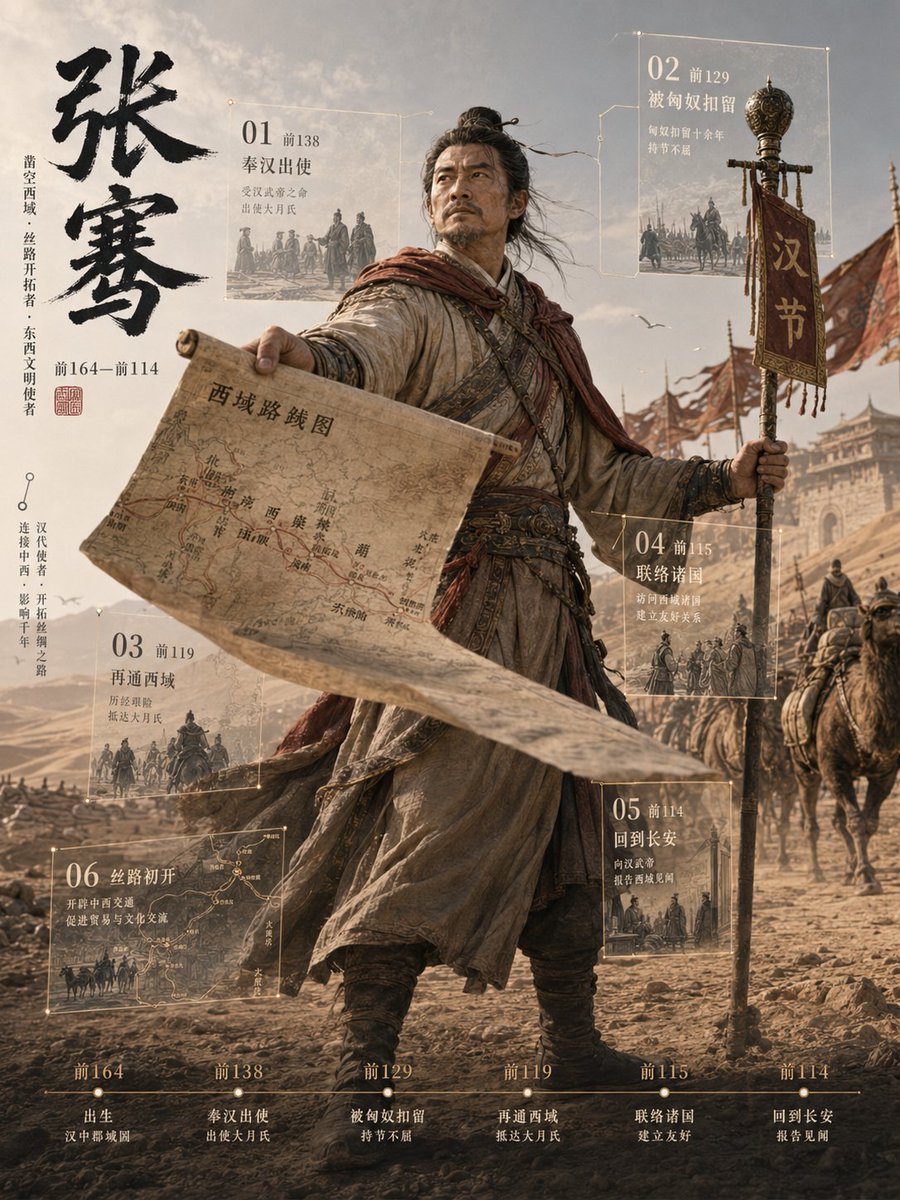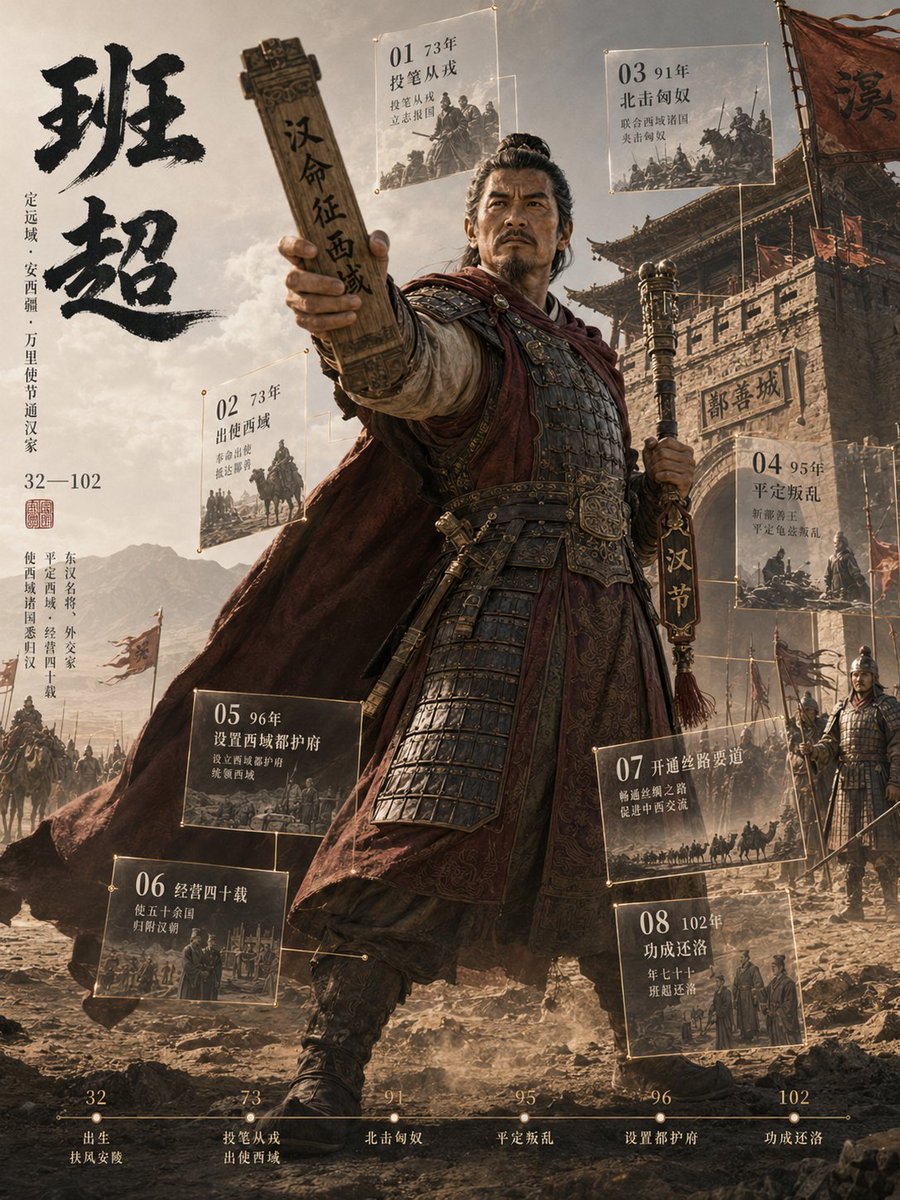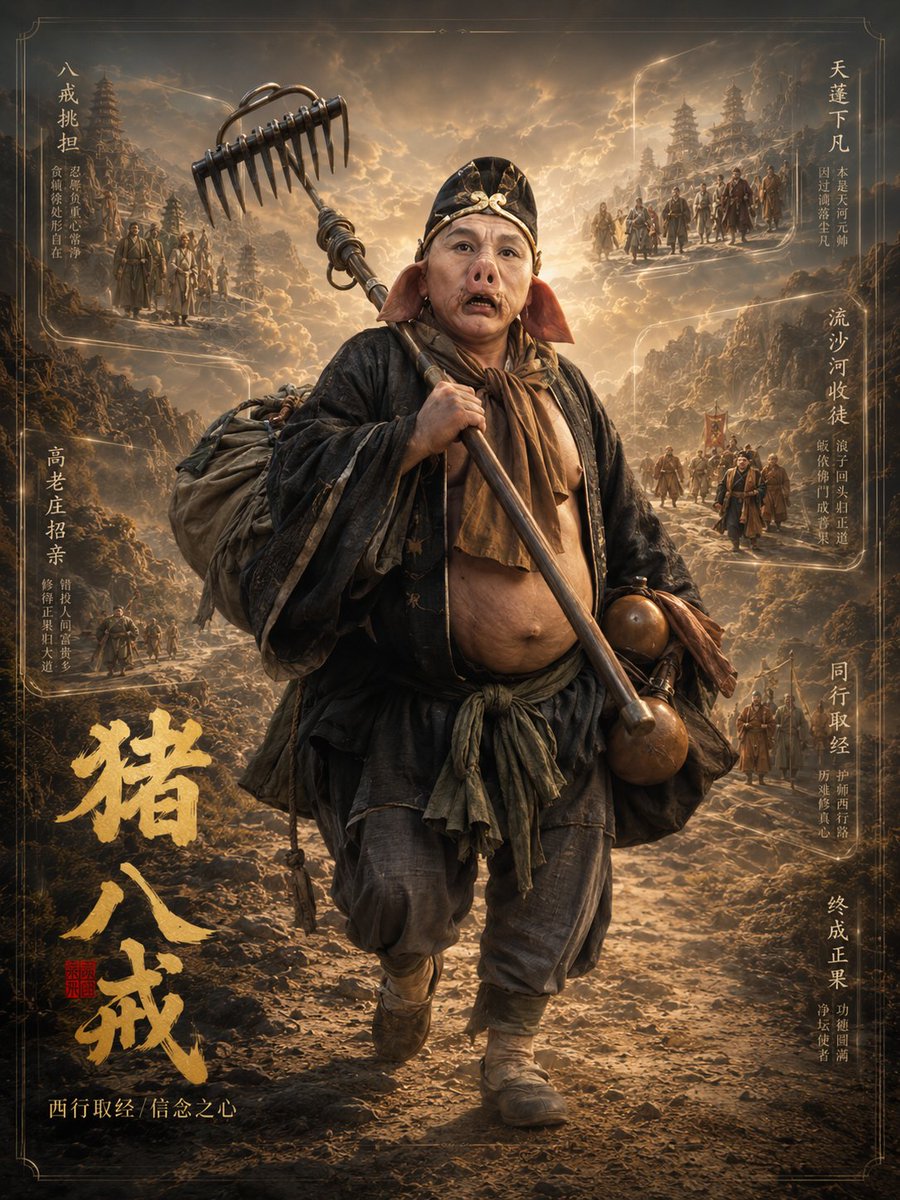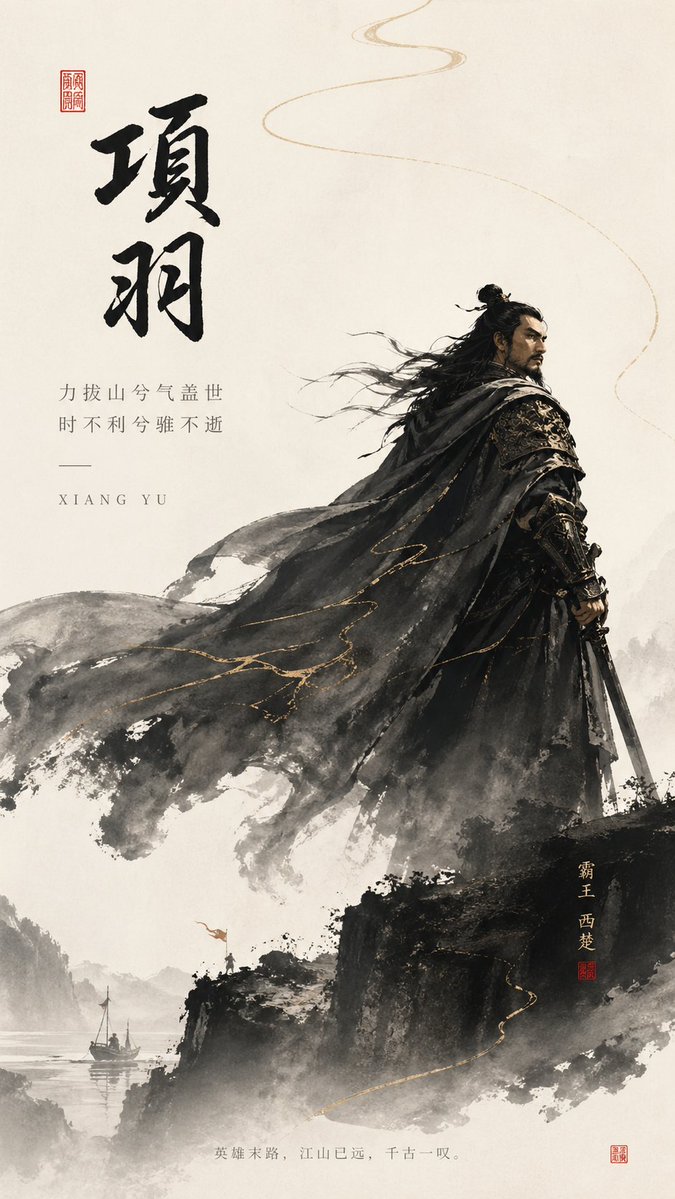
3D 玄奘历史档案海报
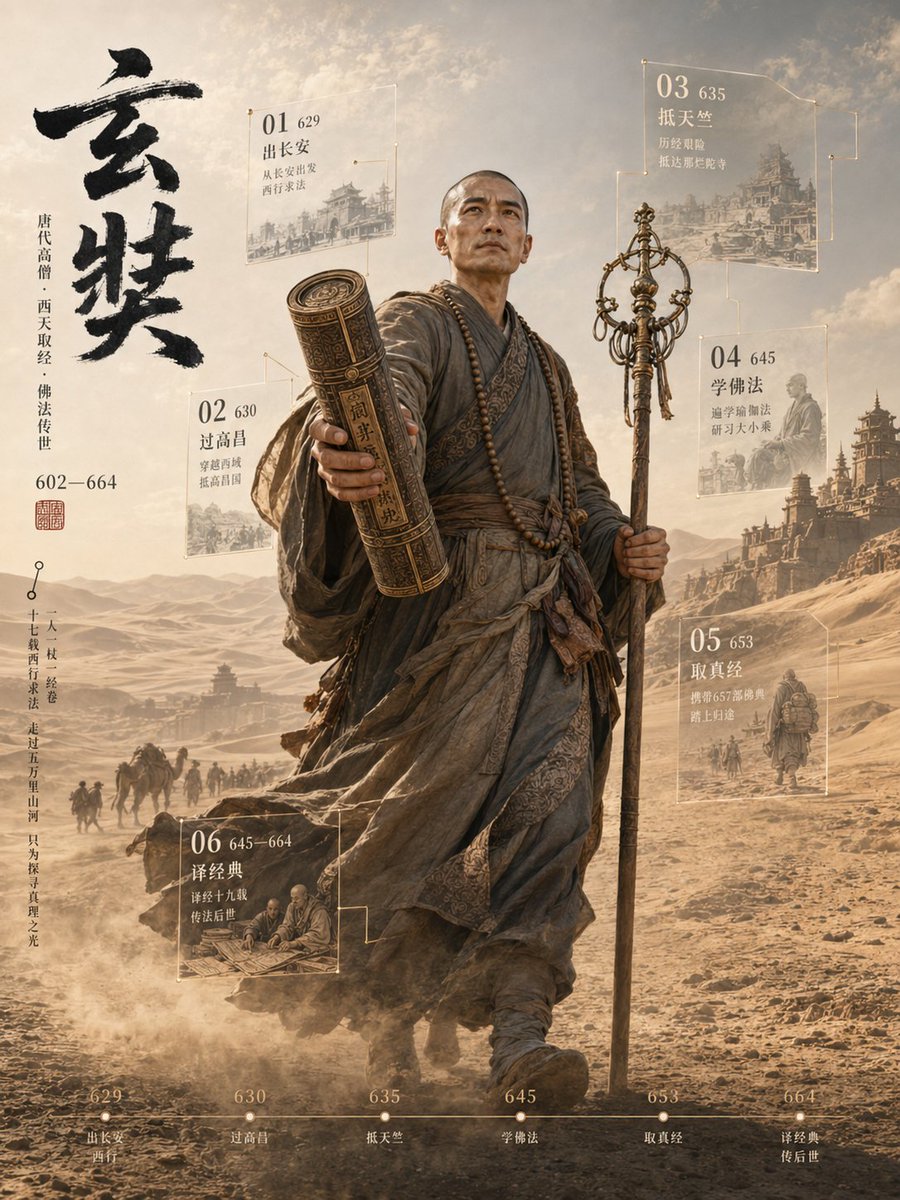
生成一张电影质感的 3D 历史人物海报,包含玄奘、丝绸之路风光、中国书法、六个档案面板以及底部的时间轴。
- Category
- Charts & Infographics
- Model
- GPT Image 2
- Creator
- Larus Canus
- Source language
- en
- Source ID
- 21198
- Published
- May 15, 2026
Full prompt
Goal: Create a cinematic vertical 3D historical figure archive poster about {argument name="character name" default="Xuanzang"}, showing a Tang dynasty monk as a monumental full-body statue-like traveler walking toward the viewer through a desert Silk Road landscape. Use an epic museum-exhibition style with realistic 3D rendering, documentary historical atmosphere, and floating translucent data panels.

Canvas: Vertical 3:4 poster, warm sepia and dusty gold color palette, high detail, dramatic backlight, hazy sky, windblown sand, ancient city silhouettes and pagodas in the distance. The central figure occupies most of the height, slightly right of center, walking forward with strong depth and scale.

Main subject: A bald Tang dynasty Buddhist monk in layered weathered gray-brown robes, wrapped sashes, prayer beads around the neck, worn cloth textures, dust and wind movement. He holds a tall ornate monk staff in his right hand and extends an ancient rolled scripture tube or sutra scroll case toward the viewer in his left hand, creating a strong foreground perspective. The face area should be softly obscured or neutral rather than a recognizable modern face. The pose should feel determined, solemn, and pioneering.

Left title column: Large expressive black ink-brush Chinese calligraphy reading {argument name="main calligraphy title" default="玄奘"} at the upper left. Beside it, add thin vertical Chinese-style biographical text indicating Tang dynasty monk, westward scripture journey, Buddhist transmission, and lifespan 602—664. Add a small red seal stamp under the biographical text. Add an additional slim vertical annotation line near the lower left like an archival quote or route note.

Floating archive panels: Include exactly 6 semi-transparent glass panels with thin gold outlines, small node connectors, white/gold text, faint historical illustration backgrounds, and a numbered sequence. The six panels are: 01, year 629, departure from Chang'an; 02, year 630, crossing Gaochang; 03, year 635, reaching Tianzhu/India; 04, year 645, studying Buddhism and returning east; 05, year 653, collecting and bringing back scriptures; 06, years 645—664, translating classics and transmitting them to later generations. Place panels around the figure: 01 upper left, 02 mid-left, 03 upper right, 04 right middle, 05 lower right, 06 lower left. Keep the panels legible but ethereal, as if holographic museum labels.

Bottom timeline: Add one thin horizontal timeline across the bottom with exactly 6 marked dots labeled 629, 630, 635, 645, 653, and 664. Under the dots, add short Chinese-style event captions matching the six archive panels. Use small refined serif or Song-style typography in off-white/gold.

Background details: A vast desert road with caravan silhouettes, camels, monks, travelers, dust clouds, distant mountains, and ancient frontier architecture. Include faint ruined city walls and pagoda-like structures to support the historical westward journey atmosphere. Make the scroll case and monk staff break the flat poster plane visually, as if protruding from the archival layout.

Visual style: {argument name="visual style" default="ultra-realistic 3D historical poster, cinematic lighting, museum archive infographic, sepia desert palette, volumetric dust, high-detail cloth and metal textures"}. Elegant, solemn, heroic, not cartoonish. Combine realistic historical portraiture with infographic overlays and Chinese ink-calligraphy aesthetics.

Constraints: Use exactly 1 central character, exactly 6 floating archive panels, and exactly 6 bottom timeline markers. No modern objects, no English text on the poster unless requested, no watermark, no logo, no extra characters in the foreground.
Translations
3D 玄奘历史档案海报
enGoal: Create a cinematic vertical 3D historical figure archive poster about {argument name="character name" default="Xuanzang"}, showing a Tang dynasty monk as a monumental full-body statue-like traveler walking toward the viewer through a desert Silk Road landscape. Use an epic museum-exhibition style with realistic 3D rendering, documentary historical atmosphere, and floating translucent data panels. Canvas: Vertical 3:4 poster, warm sepia and dusty gold color palette, high detail, dramatic backlight, hazy sky, windblown sand, ancient city silhouettes and pagodas in the distance. The central figure occupies most of the height, slightly right of center, walking forward with strong depth and scale. Main subject: A bald Tang dynasty Buddhist monk in layered weathered gray-brown robes, wrapped sashes, prayer beads around the neck, worn cloth textures, dust and wind movement. He holds a tall ornate monk staff in his right hand and extends an ancient rolled scripture tube or sutra scroll case toward the viewer in his left hand, creating a strong foreground perspective. The face area should be softly obscured or neutral rather than a recognizable modern face. The pose should feel determined, solemn, and pioneering. Left title column: Large expressive black ink-brush Chinese calligraphy reading {argument name="main calligraphy title" default="玄奘"} at the upper left. Beside it, add thin vertical Chinese-style biographical text indicating Tang dynasty monk, westward scripture journey, Buddhist transmission, and lifespan 602—664. Add a small red seal stamp under the biographical text. Add an additional slim vertical annotation line near the lower left like an archival quote or route note. Floating archive panels: Include exactly 6 semi-transparent glass panels with thin gold outlines, small node connectors, white/gold text, faint historical illustration backgrounds, and a numbered sequence. The six panels are: 01, year 629, departure from Chang'an; 02, year 630, crossing Gaochang; 03, year 635, reaching Tianzhu/India; 04, year 645, studying Buddhism and returning east; 05, year 653, collecting and bringing back scriptures; 06, years 645—664, translating classics and transmitting them to later generations. Place panels around the figure: 01 upper left, 02 mid-left, 03 upper right, 04 right middle, 05 lower right, 06 lower left. Keep the panels legible but ethereal, as if holographic museum labels. Bottom timeline: Add one thin horizontal timeline across the bottom with exactly 6 marked dots labeled 629, 630, 635, 645, 653, and 664. Under the dots, add short Chinese-style event captions matching the six archive panels. Use small refined serif or Song-style typography in off-white/gold. Background details: A vast desert road with caravan silhouettes, camels, monks, travelers, dust clouds, distant mountains, and ancient frontier architecture. Include faint ruined city walls and pagoda-like structures to support the historical westward journey atmosphere. Make the scroll case and monk staff break the flat poster plane visually, as if protruding from the archival layout. Visual style: {argument name="visual style" default="ultra-realistic 3D historical poster, cinematic lighting, museum archive infographic, sepia desert palette, volumetric dust, high-detail cloth and metal textures"}. Elegant, solemn, heroic, not cartoonish. Combine realistic historical portraiture with infographic overlays and Chinese ink-calligraphy aesthetics. Constraints: Use exactly 1 central character, exactly 6 floating archive panels, and exactly 6 bottom timeline markers. No modern objects, no English text on the poster unless requested, no watermark, no logo, no extra characters in the foreground.
3D 玄奘历史档案海报
zh-CN目标:创作一张电影质感的 3D 历史人物档案竖版海报,主角为 {argument name="character name" default="玄奘"},展现一位唐代僧人如纪念碑般全身雕像般的行者形象,正走在丝绸之路的沙漠景观中,向观众迎面而来。采用史诗般的博物馆展览风格,结合写实的 3D 渲染、纪录片式的历史氛围以及悬浮的半透明数据面板。 画布:3:4 竖版海报,温暖的深褐色与尘金色调,高细节,戏剧性的背光,朦胧的天空,风沙,远处的古城轮廓和佛塔。中心人物占据大部分高度,位于中心偏右,向前行走,具有强烈的深度感和比例感。 主体:一位唐代秃头佛教僧人,身着层叠的陈旧灰褐色僧袍,缠绕着腰带,颈挂念珠,布料质感磨损,带有风沙拂动的效果。他右手持一根华丽的高僧杖,左手向观众伸出一个古老的卷轴经筒,营造出强烈的近景透视感。面部区域应柔和遮蔽或保持中性,而非可辨认的现代面孔。姿态应显得坚定、庄重且具有开拓精神。 左侧标题栏:左上方书写醒目的黑色水墨书法大字 {argument name="main calligraphy title" default="玄奘"}。旁边添加纤细的竖排中式传记文字,注明唐代僧人、西行取经、佛教传播以及生卒年 602—664。在传记文字下方添加一枚小型红色印章。在左下角附近添加一条额外的纤细竖排注释线,如档案引文或路线备注。 悬浮档案面板:包含 6 个半透明玻璃面板,带有纤细的金色轮廓、小型节点连接器、白/金色文字、淡淡的历史插画背景以及编号序列。这 6 个面板分别为:01,629 年,从长安出发;02,630 年,穿越高昌;03,635 年,抵达天竺/印度;04,645 年,研习佛法并东归;05,653 年,收集并带回经书;06,645—664 年,翻译经典并传之后世。面板环绕人物放置:01 在左上,02 在左中,03 在右上,04 在右中,05 在右下,06 在左下。保持面板清晰但空灵,如同全息博物馆标签。 底部时间轴:在底部添加一条纤细的水平时间轴,上面有 6 个标记点,分别标注为 629、630、635、645、653 和 664。在点下方,添加与 6 个档案面板相对应的简短中式事件说明。使用精致的衬线体或宋体,颜色为米白色/金色。 背景细节:广阔的沙漠道路,有商队剪影、骆驼、僧侣、行者、尘云、远山和古代边疆建筑。包含隐约的废弃城墙和佛塔状结构,以烘托历史西行之旅的氛围。让经筒和僧杖在视觉上打破海报的平面感,仿佛从档案布局中凸显出来。 视觉风格:{argument name="visual style" default="超写实 3D 历史海报,电影级灯光,博物馆档案信息图,深褐色沙漠色调,体积感尘埃,高细节布料与金属质感"}。优雅、庄重、英勇,非卡通风格。将写实的历史肖像与信息图叠加层及中国水墨书法美学相结合。 约束:仅限 1 个中心人物,正好 6 个悬浮档案面板,正好 6 个底部时间轴标记。无现代物品,海报上无英文文本(除非另有要求),无水印,无 Logo,前景中无额外人物。