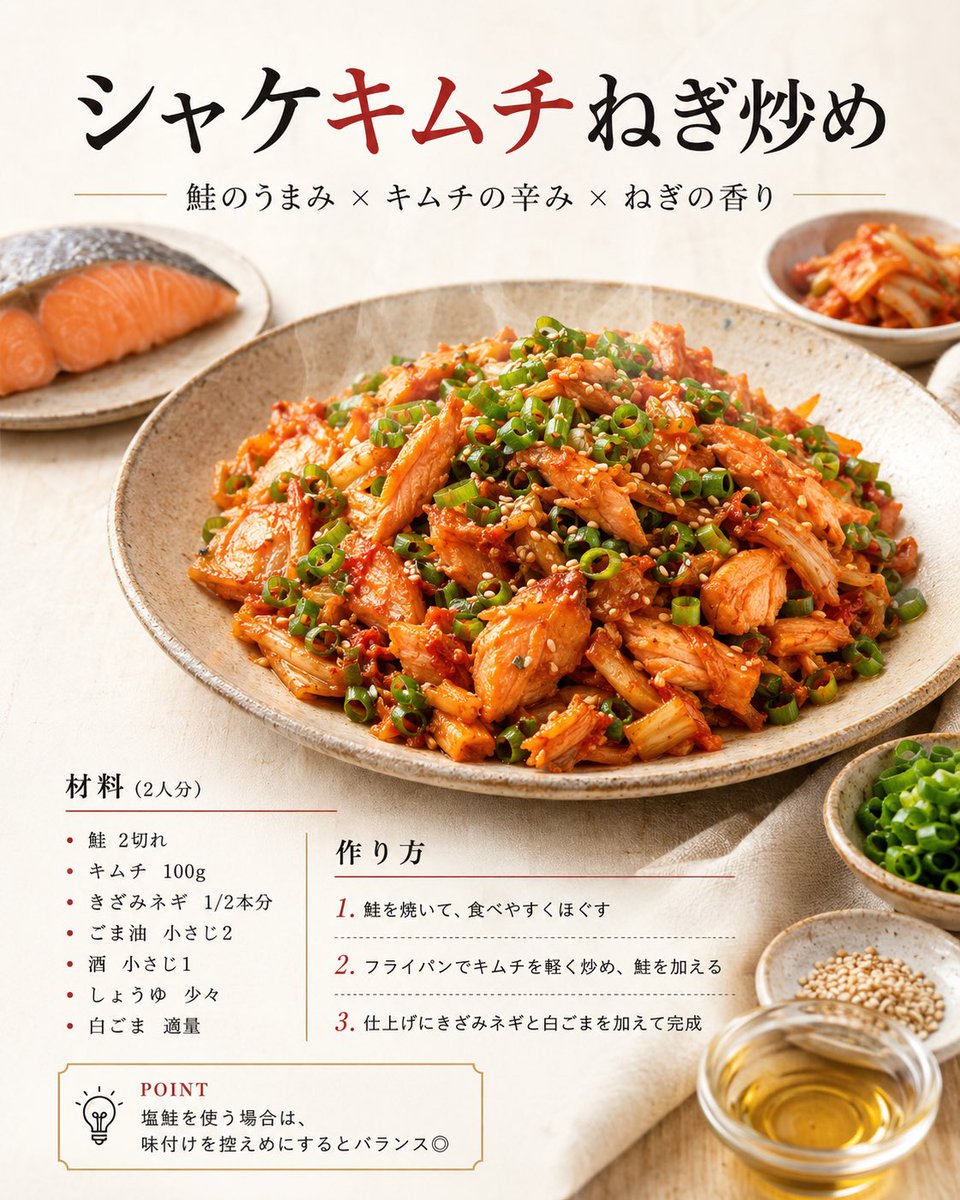
日式三文鱼泡菜食谱海报
一张日式食谱风格的方形图片,展示了三文鱼泡菜炒葱,包含配料、步骤及烹饪小贴士。
- Category
- Charts & Infographics
- Model
- GPT Image 2
- Creator
- Maki@Sunwood AI Labs.
- Source language
- en
- Source ID
- 24021
- Published
- Jun 3, 2026
Full prompt
Goal: Create a square Japanese recipe poster for {argument name="dish name" default="シャケキムチねぎ炒め"}, showing an appetizing home-cooked salmon, kimchi, and scallion stir-fry with clear recipe information.

Canvas: 1:1 square image, warm natural daylight food photography style on a pale wooden tabletop, soft cream background, high-resolution editorial recipe-card look.

Layout: Large brush-calligraphy Japanese title across the top; make the word “キムチ” red and the rest black. Under it, add a thin decorative horizontal line on both sides of the subtitle “鮭のうまみ × キムチの辛み × ねぎの香り”. Center the composition around one large shallow beige ceramic plate filled with the finished dish. Place small ingredient dishes around it: exactly 5 visible supporting items — 1 plate with two raw salmon fillets at upper left, 1 small bowl of kimchi at upper right, 1 small bowl of chopped green onions at lower right, 1 small bowl of white sesame seeds at bottom right, and 1 small glass bowl of golden cooking oil near the bottom right foreground.

Food details: The main dish should look glossy and spicy: flaked salmon pieces, red-orange kimchi strips, pale onion or scallion stems, many chopped green onion rings scattered on top, and toasted sesame seeds. Emphasize steam-free but freshly cooked texture, vibrant red kimchi sauce, moist salmon flakes, and rustic ceramic tableware.

Text content: Add a lower-left recipe section titled “材料(2人分)” with exactly 6 bullet ingredients: “鮭 2切れ”, “キムチ 100g”, “きざみネギ 1/2本分”, “ごま油 小さじ2”, “酒 小さじ1”, “しょうゆ 少々”, and “白ごま 適量”. Add a lower-middle preparation section titled “作り方” with exactly 3 numbered steps: “1. 鮭を焼いて、食べやすくほぐす”, “2. フライパンでキムチを軽く炒め、鮭を加える”, “3. 仕上げにきざみネギと白ごまを加えて完成”. Add a boxed note at the bottom left with a simple lightbulb icon, the label “POINT”, and the note “塩鮭を使う場合は、味付けを控えめにするとバランス◎”.

Visual style: Japanese cookbook magazine design, elegant minimal typography, black and dark red accents, thin rule lines, subtle beige paper texture, realistic food photography blended with clean graphic layout. Keep the text crisp and legible, with no extra labels, logos, watermarks, or people.
Translations
日式三文鱼泡菜食谱海报
enGoal: Create a square Japanese recipe poster for {argument name="dish name" default="シャケキムチねぎ炒め"}, showing an appetizing home-cooked salmon, kimchi, and scallion stir-fry with clear recipe information. Canvas: 1:1 square image, warm natural daylight food photography style on a pale wooden tabletop, soft cream background, high-resolution editorial recipe-card look. Layout: Large brush-calligraphy Japanese title across the top; make the word “キムチ” red and the rest black. Under it, add a thin decorative horizontal line on both sides of the subtitle “鮭のうまみ × キムチの辛み × ねぎの香り”. Center the composition around one large shallow beige ceramic plate filled with the finished dish. Place small ingredient dishes around it: exactly 5 visible supporting items — 1 plate with two raw salmon fillets at upper left, 1 small bowl of kimchi at upper right, 1 small bowl of chopped green onions at lower right, 1 small bowl of white sesame seeds at bottom right, and 1 small glass bowl of golden cooking oil near the bottom right foreground. Food details: The main dish should look glossy and spicy: flaked salmon pieces, red-orange kimchi strips, pale onion or scallion stems, many chopped green onion rings scattered on top, and toasted sesame seeds. Emphasize steam-free but freshly cooked texture, vibrant red kimchi sauce, moist salmon flakes, and rustic ceramic tableware. Text content: Add a lower-left recipe section titled “材料(2人分)” with exactly 6 bullet ingredients: “鮭 2切れ”, “キムチ 100g”, “きざみネギ 1/2本分”, “ごま油 小さじ2”, “酒 小さじ1”, “しょうゆ 少々”, and “白ごま 適量”. Add a lower-middle preparation section titled “作り方” with exactly 3 numbered steps: “1. 鮭を焼いて、食べやすくほぐす”, “2. フライパンでキムチを軽く炒め、鮭を加える”, “3. 仕上げにきざみネギと白ごまを加えて完成”. Add a boxed note at the bottom left with a simple lightbulb icon, the label “POINT”, and the note “塩鮭を使う場合は、味付けを控えめにするとバランス◎”. Visual style: Japanese cookbook magazine design, elegant minimal typography, black and dark red accents, thin rule lines, subtle beige paper texture, realistic food photography blended with clean graphic layout. Keep the text crisp and legible, with no extra labels, logos, watermarks, or people.
日式三文鱼泡菜食谱海报
zh-CN目标:创建一个方形日式食谱海报,用于 {argument name="dish name" default="シャケキムチねぎ炒め"},展示诱人的家常三文鱼泡菜炒葱,并配有清晰的食谱信息。 画布:1:1 方形图片,采用温暖的自然光食物摄影风格,背景为浅色木质桌面和柔和的奶油色,呈现高分辨率的杂志食谱卡片质感。 布局:顶部使用醒目的日式毛笔书法标题;将“キムチ”二字设为红色,其余部分为黑色。下方添加一条细装饰横线,两侧环绕副标题“鮭のうまみ × キムチの辛み × ねぎの香り”。构图中心为一盘盛放成品菜肴的浅口米色陶瓷盘。周围放置 5 个小型配料碟:左上方放置一盘两片生三文鱼片,右上方放置一小碗泡菜,右下方放置一小碗葱花,右侧底部放置一小碗白芝麻,右下方前景处放置一小玻璃碗金黄色的食用油。 食物细节:主菜需呈现出光泽感和辛辣感:三文鱼块、红橙色的泡菜条、浅色的葱段,顶部撒上大量葱花和烤芝麻。强调无蒸汽但刚出锅的质感、鲜艳的红色泡菜酱汁、湿润的三文鱼肉以及质朴的陶瓷餐具。 文字内容:在左下方添加一个标题为“材料(2人分)”的食谱区,包含 6 个项目符号配料:“鮭 2切れ”、“キムチ 100g”、“きざみネギ 1/2本分”、“ごま油 小さじ2”、“酒 小さじ1”、“しょうゆ 少々”以及“白ごま 適量”。在下方中间添加一个标题为“作り方”的制作区,包含 3 个编号步骤:“1. 鮭を焼いて、食べやすくほぐす”、“2. フライパンでキムチを軽く炒め、鮭を加える”、“3. 仕上げにきざみネギと白ごまを加えて完成”。在左下角添加一个带灯泡图标的方框备注,标签为“POINT”,内容为“塩鮭を使う場合は、味付けを控えめにするとバランス◎”。 视觉风格:日式烹饪杂志设计,优雅的极简排版,黑色和深红色点缀,细线条,微妙的米色纸张纹理,将写实的食物摄影与简洁的图形布局融为一体。保持文字清晰易读,不含额外的标签、Logo、水印或人物。