日式三文鱼泡菜食谱卡
生成一张精致的方形日式食谱卡,展示烤三文鱼、泡菜、鸡蛋和杂粮饭,适用于烹饪书或社交媒体。
- 分类
- 图表信息图
- 模型
- GPT Image 2
- 来源作者
- Maki@Sunwood AI Labs.
- 原始语言
- en
- 来源 ID
- 24025
- 发布时间
- 2026年6月3日
完整提示词
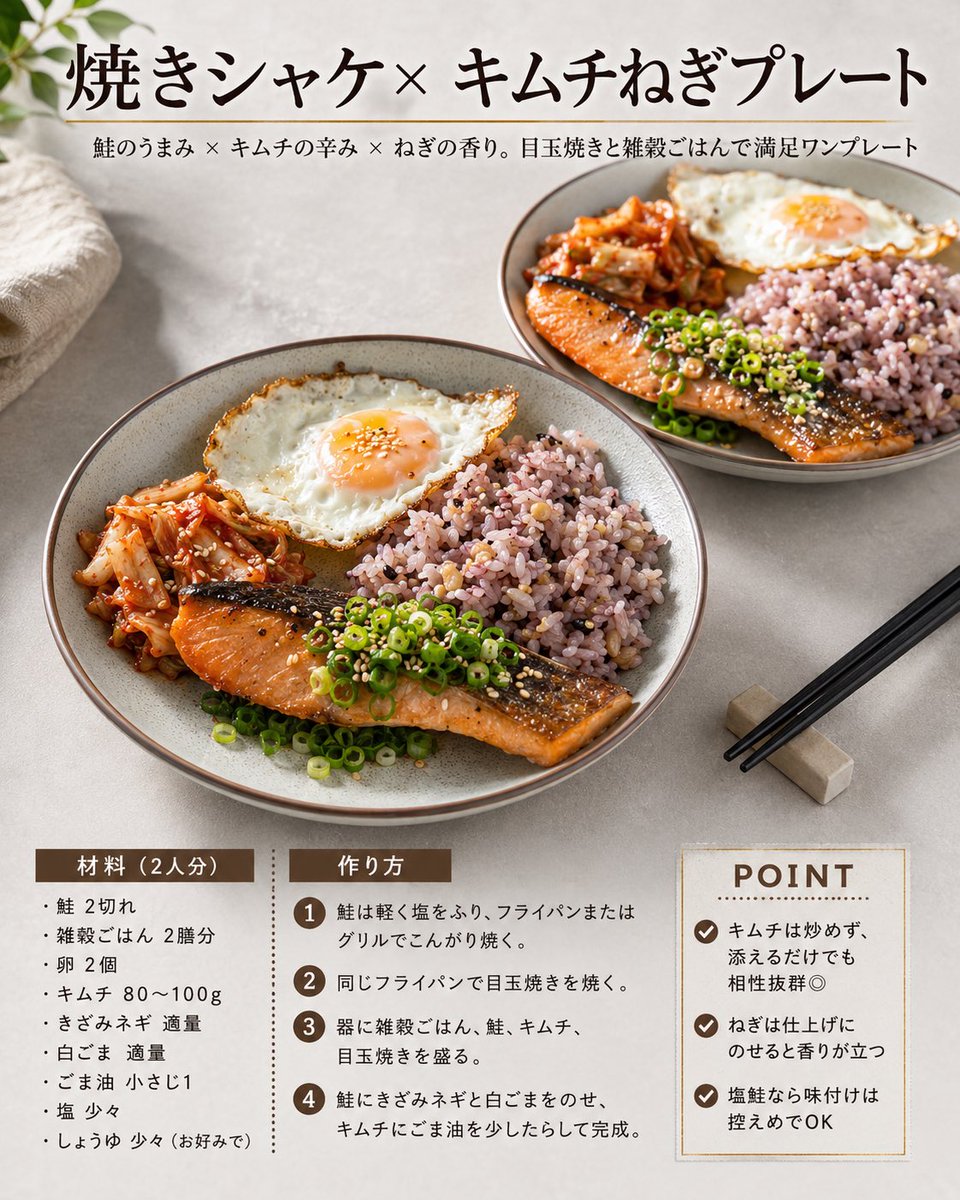
目标:制作一张方形日式餐点食谱卡,风格采用简洁现代的烹饪杂志排版。

画布:1:1 正方形图像,温暖的自然光食物摄影,柔和的米色石质桌面背景,细腻的阴影,高分辨率编辑排版。

布局:顶部三分之一处居左放置大号日文标题,下方有一条细横分割线,再下方是较小的日文副标题。中间部分由两个陶瓷餐盘占据:左下角前景为一个较大的主盘,右上角背景为一个较小的配盘。底部四分之一包含三个食谱信息块:左侧为食材,中间为烹饪步骤,右侧为带边框的“POINT”小贴士面板。

文本内容:标题使用 {argument name="headline text" default="焼きシャケ×キムチねぎプレート"}。副标题使用 {argument name="subtitle text" default="鮭のうまみ × キムチの辛み × ねぎの香り。目玉焼きと雑穀ごはんで満足ワンプレート"}。左下部分标题:「材料(2人分)」。底部中间部分标题:「作り方」。右下标题:“POINT”。保持所有文字清晰,颜色为黑色或深褐色,配以棕色标签栏,标题采用精致的日文衬线字体。

食物细节:展示两个完全相同的圆形灰米色陶瓷盘。每个盘子里有四种主要食物:带焦皮的烤三文鱼柳、流心橙色蛋黄的太阳蛋、红色的泡菜,以及一团紫色杂粮饭。在三文鱼上撒上葱花和白芝麻作为装饰。前景的盘子应最大且细节最丰富,呈轻微俯视角度;背景的盘子应较小且虚化。

可见食谱文本:食材列表必须包含 8 个项目:三文鱼 2 片、杂粮饭 2 碗、鸡蛋 2 个、泡菜 80–100 克、葱花适量、白芝麻适量、香油 1 茶匙、盐少许、酱油少许(可选)。烹饪步骤必须包含 4 个带棕色圆圈编号的步骤:将三文鱼轻微抹盐并在平底锅或烤架上煎至焦黄;用同一个锅煎蛋;将杂粮饭、三文鱼、泡菜和煎蛋摆盘;在三文鱼上撒上葱花和白芝麻,在泡菜上淋上香油即可完成。POINT 面板必须包含 3 个带勾选标记的小贴士:不要炒泡菜,直接添加即可获得足够风味;最后加入葱花以突出香气;调味要适度,因为盐渍三文鱼本身已有咸味。

道具与造型:左上角放置一块折叠的米色亚麻布,左上边缘点缀几片柔和的绿叶,右下角放置一双黑色筷子,斜靠在长方形筷架上。使用诱人的暖色调:三文鱼橙、泡菜红、葱绿、蛋白与蛋黄橙、紫米色、米色陶瓷。

约束:画面中不得出现人物、手部,除两个餐盘外不得有额外餐具,无水印,无 Logo,无过多的装饰性图形,保持高级的家庭食谱卡美学。
多语言版本
日式三文鱼泡菜食谱卡
enGoal: Create a square Japanese recipe card for a plated meal, styled like a clean modern cookbook magazine page. Canvas: 1:1 square image, warm natural daylight food photography, soft beige stone tabletop background, subtle shadows, high-resolution editorial layout. Layout: The top third has a large Japanese headline centered-left, with a thin horizontal divider line beneath it and a smaller Japanese subtitle below. The middle half is dominated by two ceramic plates of food: one large main plate in the lower-left foreground and one smaller plate in the upper-right background. The bottom quarter contains three recipe information blocks: ingredients on the left, cooking steps in the center, and a boxed POINT tips panel on the right. Text content: Use the headline {argument name="headline text" default="焼きシャケ×キムチねぎプレート"}. Use the subtitle {argument name="subtitle text" default="鮭のうまみ × キムチの辛み × ねぎの香り。目玉焼きと雑穀ごはんで満足ワンプレート"}. Bottom-left section title: 「材料(2人分)」. Bottom-center section title: 「作り方」. Bottom-right title: “POINT”. Keep all text crisp, black or dark brown, with brown label bars and a refined Japanese serif typeface for the headline. Food subject details: Show exactly two matching round gray-beige ceramic plates. Each plate contains exactly four main food components: grilled salmon fillet with browned skin, a sunny-side-up fried egg with runny orange yolk, red kimchi, and a mound of purple multigrain rice. Garnish the salmon with sliced green scallions and white sesame seeds. The foreground plate should be largest and most detailed, angled slightly from above; the background plate should be smaller and softly receding. Visible recipe text: Ingredients list must contain exactly 8 bullet items: salmon 2 fillets, multigrain rice 2 bowls, eggs 2, kimchi 80–100 g, chopped green onion as needed, white sesame as needed, sesame oil 1 teaspoon, salt a little, soy sauce a little if preferred. Cooking steps must contain exactly 4 numbered steps in brown circles: lightly salt and brown the salmon in a frying pan or grill; cook the fried eggs in the same pan; arrange multigrain rice, salmon, kimchi, and fried egg on plates; top the salmon with chopped green onion and white sesame, drizzle sesame oil over kimchi, and finish. POINT panel must contain exactly 3 checkmark tips: do not fry the kimchi, just add it for enough flavor; add green onion at the end so the aroma stands out; keep seasoning modest because salted salmon is flavorful. Props and styling: Add a folded cream linen cloth in the upper-left corner, a few soft green leaves entering from the top-left edge, and black chopsticks resting diagonally on a small rectangular chopstick rest at the lower-right. Use an appetizing warm color palette: salmon orange, kimchi red, scallion green, egg white and orange, purple rice, beige ceramic. Constraints: No people, no hands, no extra dishes beyond exactly two plates, no watermark, no logo, no excessive decorative graphics, maintain a premium homemade recipe-card aesthetic.
日式三文鱼泡菜食谱卡
zh-CN目标:制作一张方形日式餐点食谱卡,风格采用简洁现代的烹饪杂志排版。 画布:1:1 正方形图像,温暖的自然光食物摄影,柔和的米色石质桌面背景,细腻的阴影,高分辨率编辑排版。 布局:顶部三分之一处居左放置大号日文标题,下方有一条细横分割线,再下方是较小的日文副标题。中间部分由两个陶瓷餐盘占据:左下角前景为一个较大的主盘,右上角背景为一个较小的配盘。底部四分之一包含三个食谱信息块:左侧为食材,中间为烹饪步骤,右侧为带边框的“POINT”小贴士面板。 文本内容:标题使用 {argument name="headline text" default="焼きシャケ×キムチねぎプレート"}。副标题使用 {argument name="subtitle text" default="鮭のうまみ × キムチの辛み × ねぎの香り。目玉焼きと雑穀ごはんで満足ワンプレート"}。左下部分标题:「材料(2人分)」。底部中间部分标题:「作り方」。右下标题:“POINT”。保持所有文字清晰,颜色为黑色或深褐色,配以棕色标签栏,标题采用精致的日文衬线字体。 食物细节:展示两个完全相同的圆形灰米色陶瓷盘。每个盘子里有四种主要食物:带焦皮的烤三文鱼柳、流心橙色蛋黄的太阳蛋、红色的泡菜,以及一团紫色杂粮饭。在三文鱼上撒上葱花和白芝麻作为装饰。前景的盘子应最大且细节最丰富,呈轻微俯视角度;背景的盘子应较小且虚化。 可见食谱文本:食材列表必须包含 8 个项目:三文鱼 2 片、杂粮饭 2 碗、鸡蛋 2 个、泡菜 80–100 克、葱花适量、白芝麻适量、香油 1 茶匙、盐少许、酱油少许(可选)。烹饪步骤必须包含 4 个带棕色圆圈编号的步骤:将三文鱼轻微抹盐并在平底锅或烤架上煎至焦黄;用同一个锅煎蛋;将杂粮饭、三文鱼、泡菜和煎蛋摆盘;在三文鱼上撒上葱花和白芝麻,在泡菜上淋上香油即可完成。POINT 面板必须包含 3 个带勾选标记的小贴士:不要炒泡菜,直接添加即可获得足够风味;最后加入葱花以突出香气;调味要适度,因为盐渍三文鱼本身已有咸味。 道具与造型:左上角放置一块折叠的米色亚麻布,左上边缘点缀几片柔和的绿叶,右下角放置一双黑色筷子,斜靠在长方形筷架上。使用诱人的暖色调:三文鱼橙、泡菜红、葱绿、蛋白与蛋黄橙、紫米色、米色陶瓷。 约束:画面中不得出现人物、手部,除两个餐盘外不得有额外餐具,无水印,无 Logo,无过多的装饰性图形,保持高级的家庭食谱卡美学。