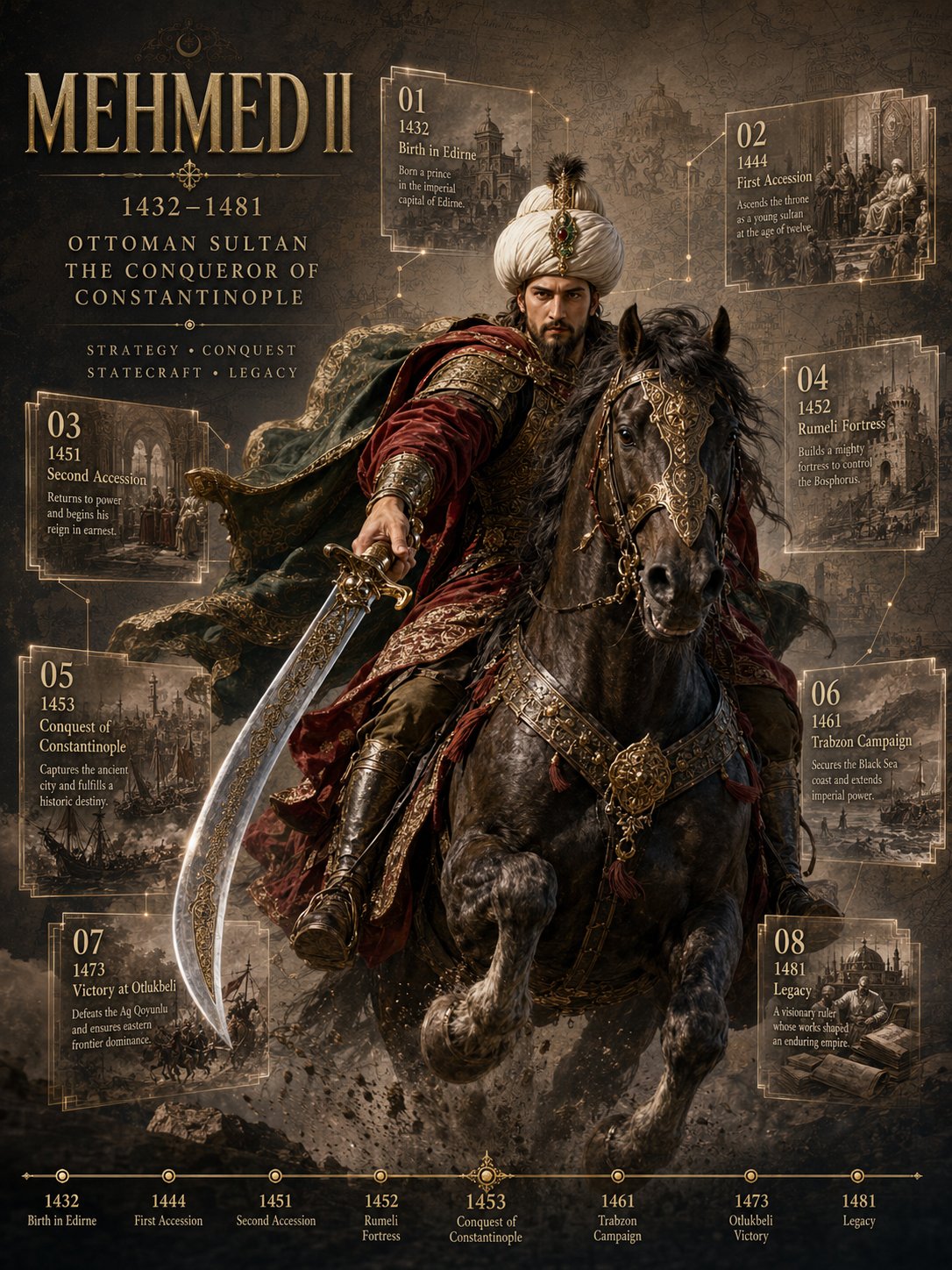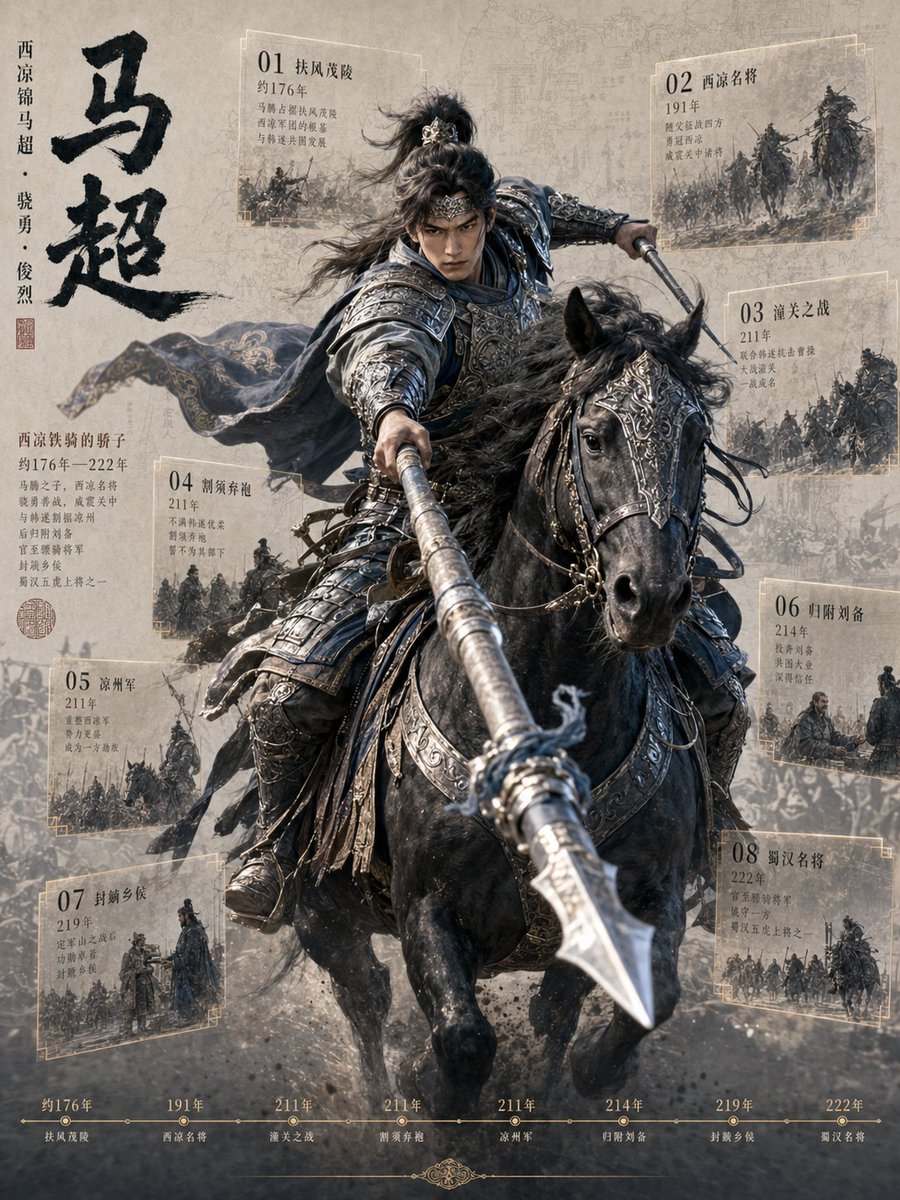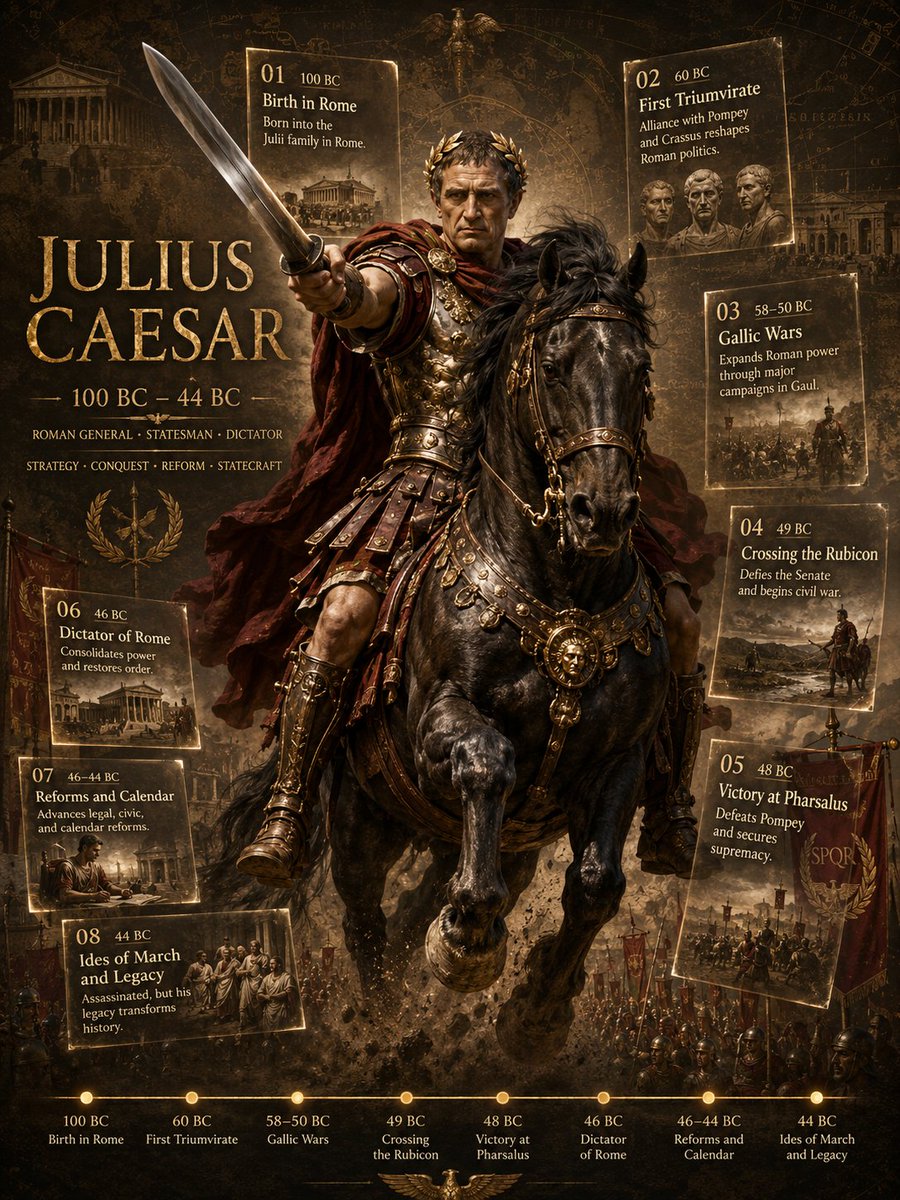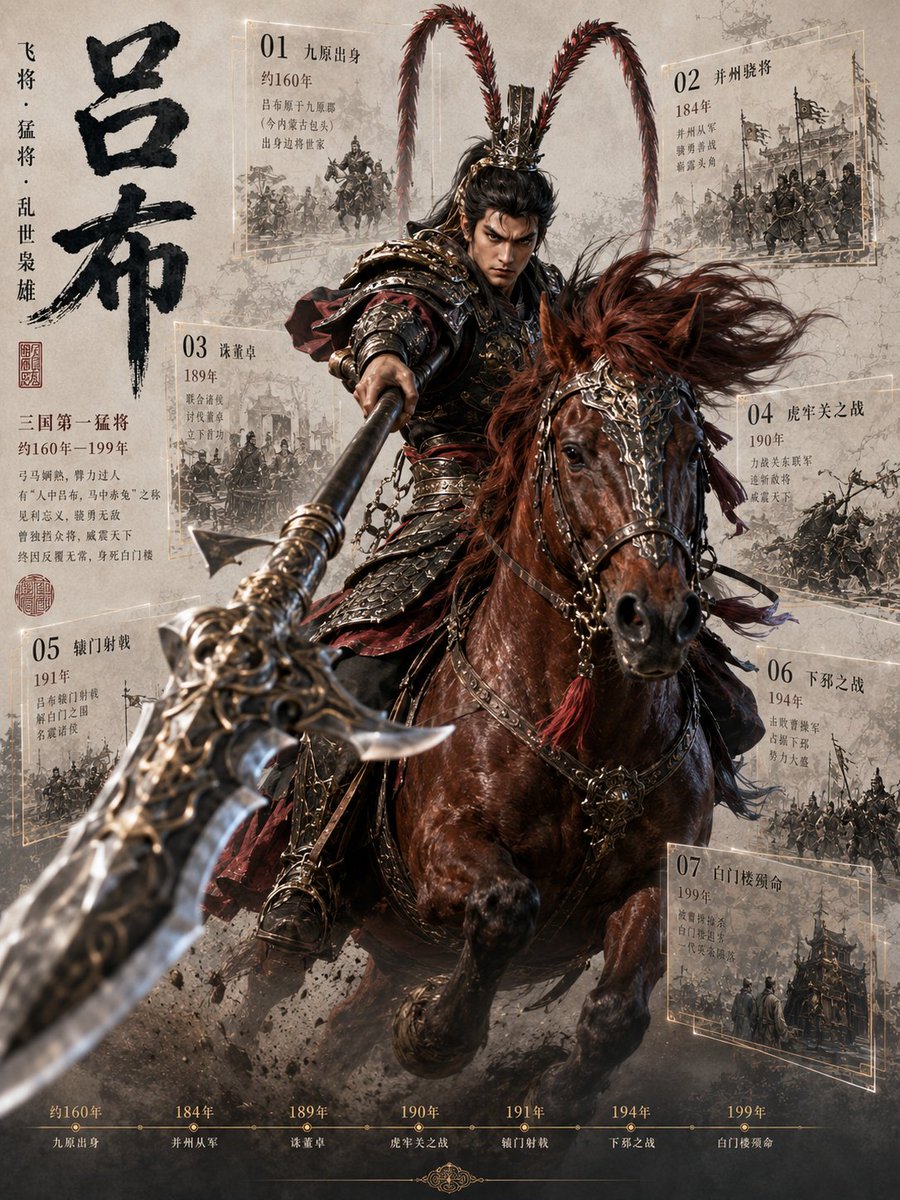
关羽历史信息图海报
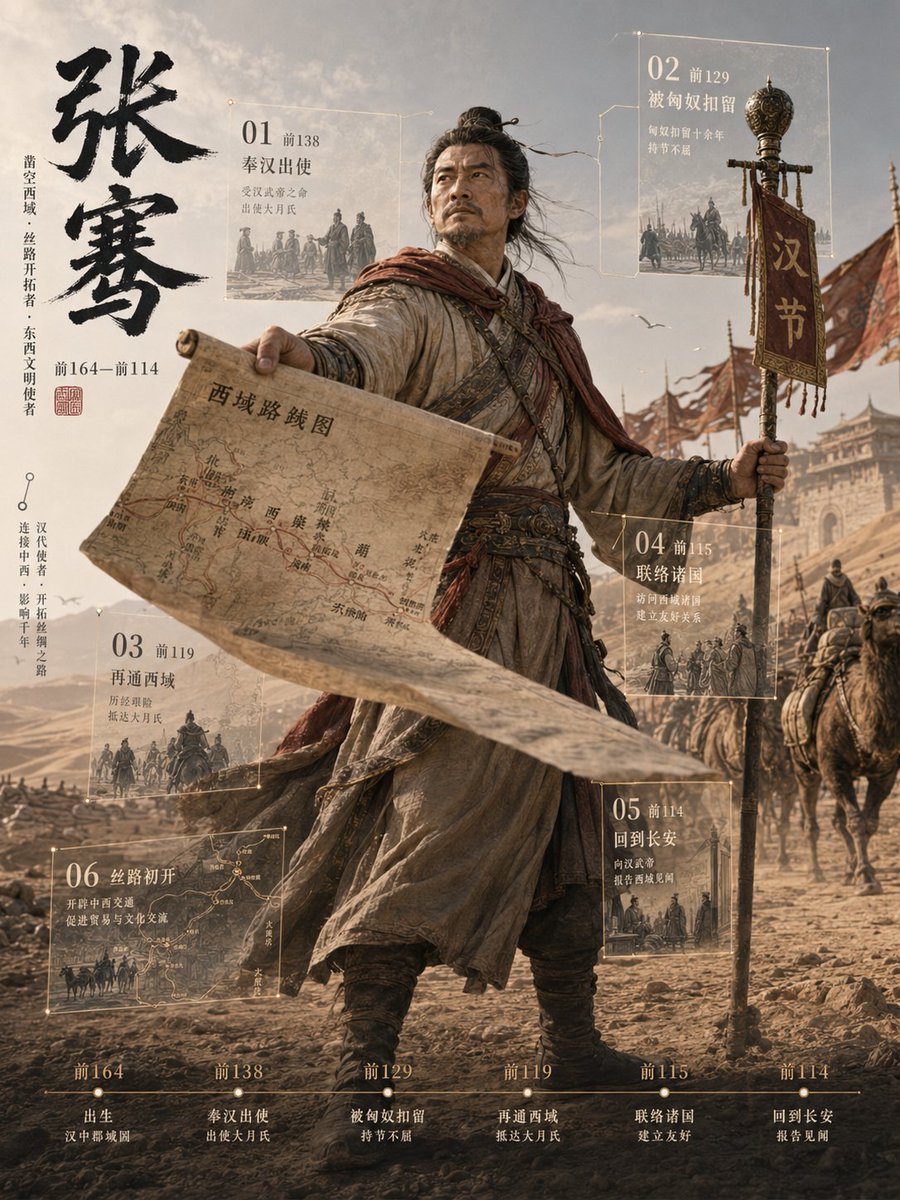
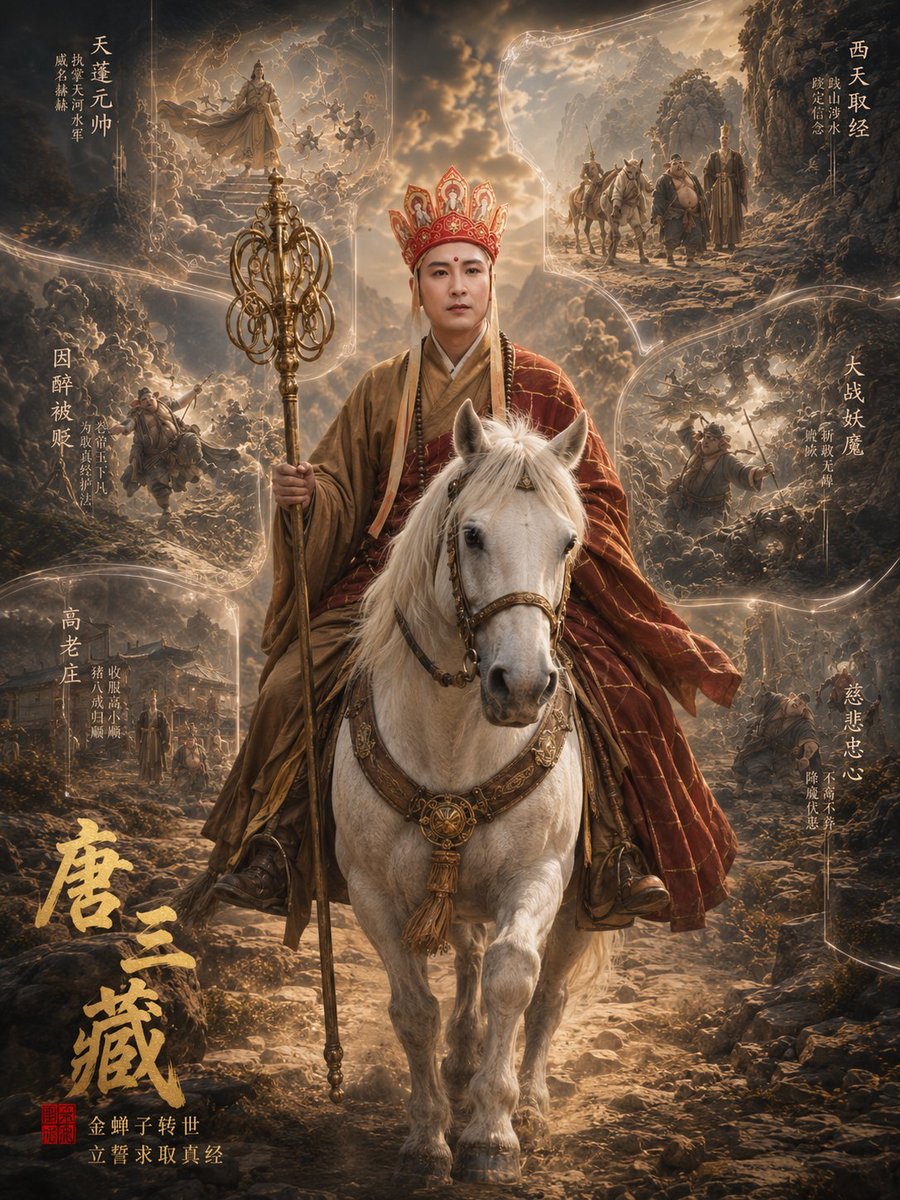
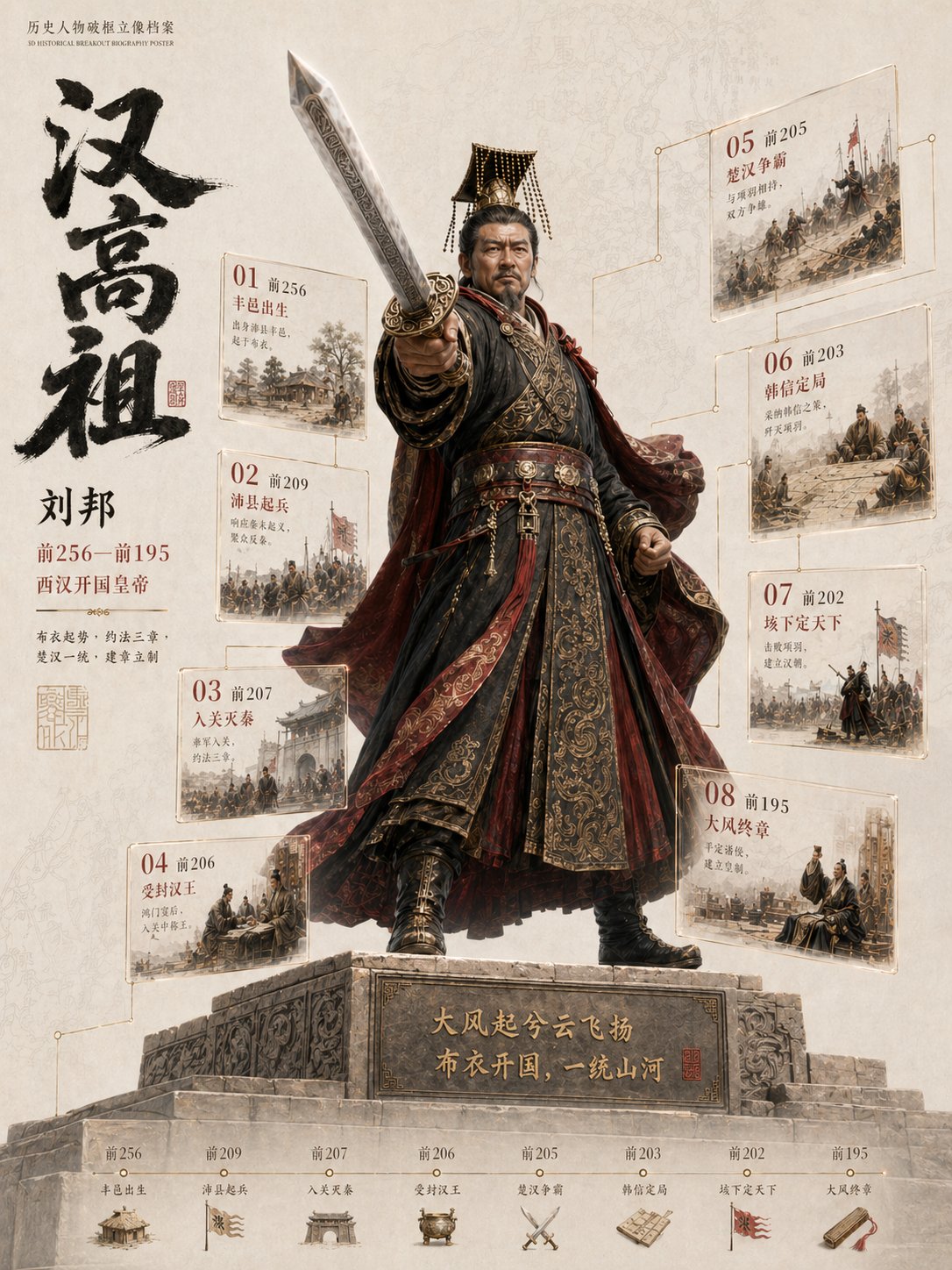
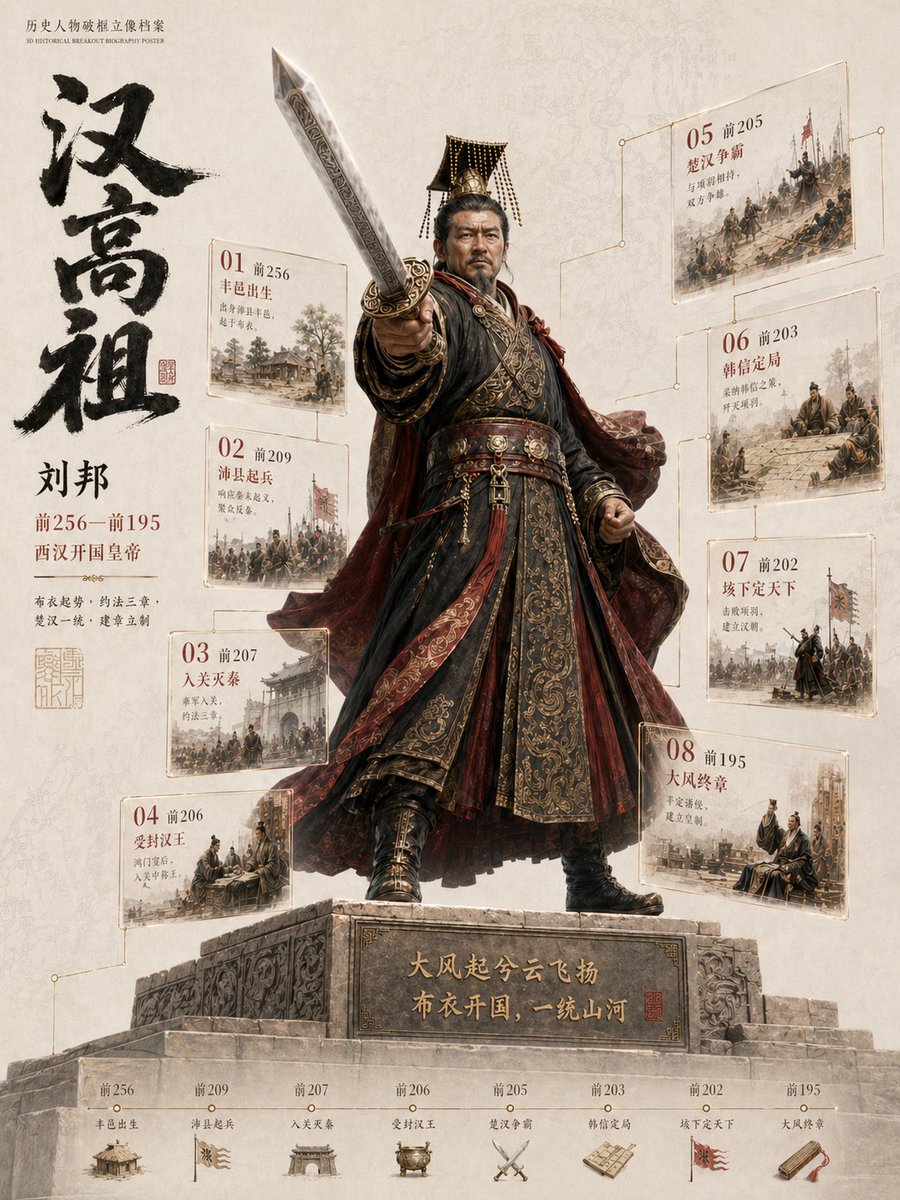
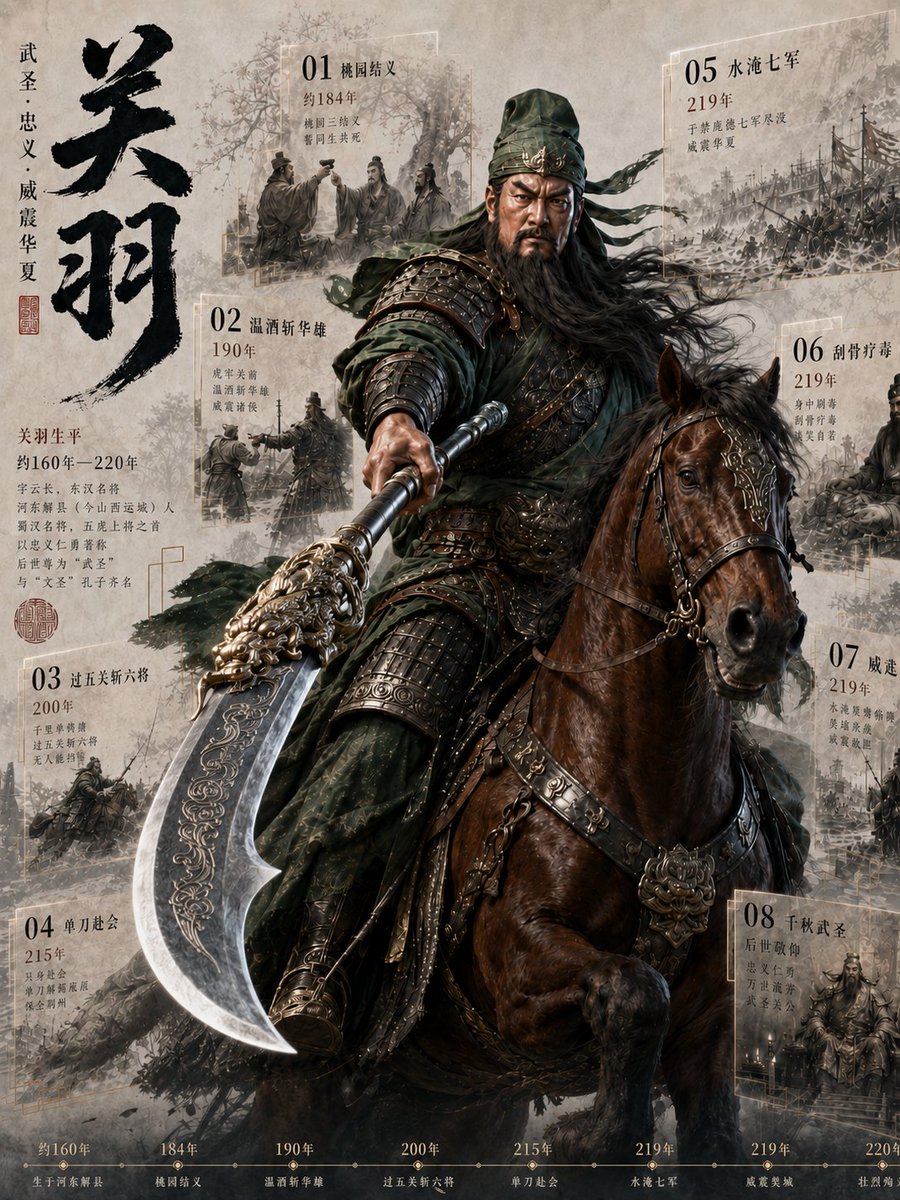
一张电影感的三国海报,展示了骑马的关羽,配有八个插画版编年史面板和底部的详细时间轴。
- 分类
- 图表信息图
- 模型
- GPT Image 2
- 来源作者
- Larus Canus
- 原始语言
- en
- 来源 ID
- 20329
- 发布时间
- 2026年5月14日
完整提示词
目标:创作一张关于 {argument name="character name" default="关羽"} 的竖版中国史诗级信息图海报,将电影感的三国武将肖像与羊皮纸风格的编年史面板相结合。

画布:高竖版海报,3:4 比例,背景为陈旧的米色宣纸,带有水墨污渍、隐约的山峦、烟雾、战场剪影以及博物馆卷轴的质感。整体色调为深褐色、炭灰色、暗橄榄绿、青铜色和柔和的血褐色。

主体:一位细节极其丰富的中国古代将军 {argument name="character name" default="关羽"} 占据画面中心,骑着一匹强壮的深褐色战马。他身穿层叠的深绿色长袍,外罩华丽的黑青铜鳞甲,配有雕花护肩、皮带、金属铆钉,头戴绿色头巾,长长的系带向右飘动。黑色的长发和胡须在风中飘扬;面部区域特意处理得柔和模糊,如同平滑的面具,而盔甲和衣物则保持锐利的细节。他手持一把巨大的华丽关刀,从中心向左下角前景延伸;刀刃巨大,呈银色,刻有金色花纹,并运用了强烈的透视缩短效果。战马肌肉线条流畅,神情警觉,配有华丽的缰绳、青铜饰牌和装饰性皮具,前腿抬起,身体略微朝向右侧。

左侧标题区:在左上方放置一个巨大的竖排黑色水墨书法标题 {argument name="large calligraphy title" default="关羽"}。旁边添加较小的竖排中文文字“武圣·忠义·威震华夏”,下方盖有一枚红色小印章。标题下方包含一段简短的生平文字:“关羽生平 / 约160年—220年 / 字云长,本字长生 / 河东解县(今山西运城)人 / 蜀汉名将,五虎上将之首 / 以忠义仁勇著称 / 后世尊为 武圣 / 与‘文圣’孔子齐名”。

编年史面板:使用 8 张半透明的矩形羊皮纸卡片围绕中心骑马者排列,每张卡片包含一个两位数编号、一个醒目的中文事件标题、年份、2–4 行较小的中文注释,以及文字背后淡化的单色战场插画。卡片应呈现为带有细白边框和水墨战争场景的层叠玻璃纸框架。
1. 左上方卡片:“01 桃园结义”,年份“约184年”,展示树下的三位结拜兄弟。
2. 左侧中部卡片:“02 温酒斩华雄”,年份“190年”,展示战场旗帜附近的将军与士兵。
3. 左侧下部卡片:“03 过五关斩六将”,年份“200年”,展示骑兵穿过关隘或堡垒的战斗场景。
4. 左下角卡片:“04 单刀赴会”,年份“215年”,展示戏剧性的江边或军事会面场景。
5. 右上方卡片:“05 水淹七军”,年份“219年”,展示洪水中的军队、船只和混乱场面。
6. 右侧中上部卡片:“06 刮骨疗毒”,年份“219年”,展示医疗场景及旁边的士兵。
7. 右侧中下部卡片:“07 威震华夏”,年份“219年”,展示烟雾缭绕的战场和密集的军队。
8. 右下角卡片:“08 败走麦城”,年份“220年”,展示坐着的将军和悲壮的最后战役氛围。

底部时间轴:在底部边缘添加一条细长的水平时间轴,包含与事件对应的 8 个标注点:“约160年 生于河东解县”、“184年 桃园结义”、“190年 温酒斩华雄”、“200年 过五关斩六将”、“215年 单刀赴会”、“219年 水淹七军”、“219年 威震华夏”、“220年 败走麦城”。使用细线连接的小金点,配以紧凑的衬线体中文说明。

视觉风格:史诗级历史奇幻写实风格,中国水墨海报设计,电影级布光,高细节金属雕刻,烟雾缭绕的氛围,战场尘土,层叠的羊皮纸拼贴,优雅的排版。中心骑马者和战马对比强烈且清晰;背景卡片略微褪色并降低饱和度。

约束条件:保持 8 张编年史卡片和 8 个底部时间轴点。不要添加现代物品、标志、水印或前景中的额外人物。保留中文文本内容作为海报排版,所有构图说明保持为英文。
多语言版本
关羽历史信息图海报
enGoal: Create a vertical historical Chinese epic infographic poster about {argument name="character name" default="Guan Yu"}, combining a cinematic Three Kingdoms warrior portrait with parchment-style chronology panels. Canvas: Tall portrait poster, 3:4 aspect ratio, aged beige rice-paper background with ink wash stains, faint mountains, smoke, battlefield silhouettes, and a museum-scroll texture. Overall palette is sepia, charcoal, dark olive green, bronze, and muted blood-brown. Main subject: A hyper-detailed armored Chinese general, {argument name="character name" default="Guan Yu"}, dominates the center, riding a powerful dark brown war horse. He wears layered dark green robes, ornate blackened bronze lamellar armor, engraved shoulder guards, leather straps, metal studs, and a green headwrap with long ribbons streaming to the right. Long black hair and beard flow in the wind; the face area is intentionally softened/obscured like a smooth blurred mask, while the armor and clothing remain sharply detailed. He holds a massive ornate guandao polearm angled from the center toward the lower left foreground; the crescent blade is oversized, silver, engraved with gold filigree, and strongly foreshortened. The horse has glossy musculature, an alert expression, ornate bridle, bronze medallions, decorative leather tack, and one raised front leg, facing slightly right. Left title area: Place a huge vertical black ink-brush calligraphy title reading {argument name="large calligraphy title" default="关羽"} on the upper left. Beside it, add smaller vertical text in Chinese reading “武圣·忠义·威震华夏”, with a small red seal stamp below. Under the title, include a short biographical text block: “关羽生平 / 约160年—220年 / 字云长,本字长生 / 河东解县(今山西运城)人 / 蜀汉名将,五虎上将之首 / 以忠义仁勇著称 / 后世尊为 武圣 / 与‘文圣’孔子齐名”. Chronology panels: Use exactly 8 translucent rectangular parchment cards arranged around the main rider, each with a large two-digit number, a bold Chinese event title, a year, 2–4 lines of smaller Chinese notes, and a faded monochrome battle illustration behind the text. The cards should look like layered glass-paper frames with thin white borders and ink-wash war scenes. 1. Top center-left card: “01 桃园结义”, year “约184年”, showing three sworn brothers under trees. 2. Mid left card: “02 温酒斩华雄”, year “190年”, showing generals and soldiers near a battlefield standard. 3. Lower left card: “03 过五关斩六将”, year “200年”, showing riders passing through a gate or fortress battle. 4. Bottom left card: “04 单刀赴会”, year “215年”, showing a dramatic riverside or military meeting scene. 5. Top right card: “05 水淹七军”, year “219年”, showing flooded armies, ships, and chaos. 6. Upper-mid right card: “06 刮骨疗毒”, year “219年”, showing a medical treatment scene with soldiers nearby. 7. Mid-lower right card: “07 威震华夏”, year “219年”, showing a smoky battlefield and massed troops. 8. Bottom right card: “08 败走麦城”, year “220年”, showing a seated general and tragic final-campaign atmosphere. Bottom timeline: Add a thin horizontal timeline along the entire bottom edge with exactly 8 labeled points matching the events: “约160年 生于河东解县”, “184年 桃园结义”, “190年 温酒斩华雄”, “200年 过五关斩六将”, “215年 单刀赴会”, “219年 水淹七军”, “219年 威震华夏”, “220年 败走麦城”. Use small gold dots connected by a fine line, with compact serif Chinese captions. Visual style: Epic historical fantasy realism, Chinese ink-wash poster design, cinematic lighting, high-detail metal engraving, smoky atmosphere, battlefield dust, layered parchment collage, elegant typography. The central rider and horse are high-contrast and sharp; the background cards are slightly faded and desaturated. Constraints: Keep exactly 8 chronology cards and exactly 8 bottom timeline points. Do not add modern objects, logos, watermarks, or extra characters in the foreground. Preserve the Chinese text content as visible poster typography, while all composition instructions remain in English.
关羽历史信息图海报
zh-CN目标:创作一张关于 {argument name="character name" default="关羽"} 的竖版中国史诗级信息图海报,将电影感的三国武将肖像与羊皮纸风格的编年史面板相结合。 画布:高竖版海报,3:4 比例,背景为陈旧的米色宣纸,带有水墨污渍、隐约的山峦、烟雾、战场剪影以及博物馆卷轴的质感。整体色调为深褐色、炭灰色、暗橄榄绿、青铜色和柔和的血褐色。 主体:一位细节极其丰富的中国古代将军 {argument name="character name" default="关羽"} 占据画面中心,骑着一匹强壮的深褐色战马。他身穿层叠的深绿色长袍,外罩华丽的黑青铜鳞甲,配有雕花护肩、皮带、金属铆钉,头戴绿色头巾,长长的系带向右飘动。黑色的长发和胡须在风中飘扬;面部区域特意处理得柔和模糊,如同平滑的面具,而盔甲和衣物则保持锐利的细节。他手持一把巨大的华丽关刀,从中心向左下角前景延伸;刀刃巨大,呈银色,刻有金色花纹,并运用了强烈的透视缩短效果。战马肌肉线条流畅,神情警觉,配有华丽的缰绳、青铜饰牌和装饰性皮具,前腿抬起,身体略微朝向右侧。 左侧标题区:在左上方放置一个巨大的竖排黑色水墨书法标题 {argument name="large calligraphy title" default="关羽"}。旁边添加较小的竖排中文文字“武圣·忠义·威震华夏”,下方盖有一枚红色小印章。标题下方包含一段简短的生平文字:“关羽生平 / 约160年—220年 / 字云长,本字长生 / 河东解县(今山西运城)人 / 蜀汉名将,五虎上将之首 / 以忠义仁勇著称 / 后世尊为 武圣 / 与‘文圣’孔子齐名”。 编年史面板:使用 8 张半透明的矩形羊皮纸卡片围绕中心骑马者排列,每张卡片包含一个两位数编号、一个醒目的中文事件标题、年份、2–4 行较小的中文注释,以及文字背后淡化的单色战场插画。卡片应呈现为带有细白边框和水墨战争场景的层叠玻璃纸框架。 1. 左上方卡片:“01 桃园结义”,年份“约184年”,展示树下的三位结拜兄弟。 2. 左侧中部卡片:“02 温酒斩华雄”,年份“190年”,展示战场旗帜附近的将军与士兵。 3. 左侧下部卡片:“03 过五关斩六将”,年份“200年”,展示骑兵穿过关隘或堡垒的战斗场景。 4. 左下角卡片:“04 单刀赴会”,年份“215年”,展示戏剧性的江边或军事会面场景。 5. 右上方卡片:“05 水淹七军”,年份“219年”,展示洪水中的军队、船只和混乱场面。 6. 右侧中上部卡片:“06 刮骨疗毒”,年份“219年”,展示医疗场景及旁边的士兵。 7. 右侧中下部卡片:“07 威震华夏”,年份“219年”,展示烟雾缭绕的战场和密集的军队。 8. 右下角卡片:“08 败走麦城”,年份“220年”,展示坐着的将军和悲壮的最后战役氛围。 底部时间轴:在底部边缘添加一条细长的水平时间轴,包含与事件对应的 8 个标注点:“约160年 生于河东解县”、“184年 桃园结义”、“190年 温酒斩华雄”、“200年 过五关斩六将”、“215年 单刀赴会”、“219年 水淹七军”、“219年 威震华夏”、“220年 败走麦城”。使用细线连接的小金点,配以紧凑的衬线体中文说明。 视觉风格:史诗级历史奇幻写实风格,中国水墨海报设计,电影级布光,高细节金属雕刻,烟雾缭绕的氛围,战场尘土,层叠的羊皮纸拼贴,优雅的排版。中心骑马者和战马对比强烈且清晰;背景卡片略微褪色并降低饱和度。 约束条件:保持 8 张编年史卡片和 8 个底部时间轴点。不要添加现代物品、标志、水印或前景中的额外人物。保留中文文本内容作为海报排版,所有构图说明保持为英文。